
BOOK CLUB · ROBERT SAPOLSKY
Why Zebras Don’t Get Ulcers
The psychology and physiology of stress, chapter by chapter
This section connects Sapolsky’s ideas with psychobiology: from the rapid fight-or-flight response to the effects of chronic stress on the heart, metabolism, digestion, growth, reproduction and immunity.
Available chapters · 1–18
1Why Don’t Zebras Get Ulcers?
Why Don’t Zebras Get Ulcers?
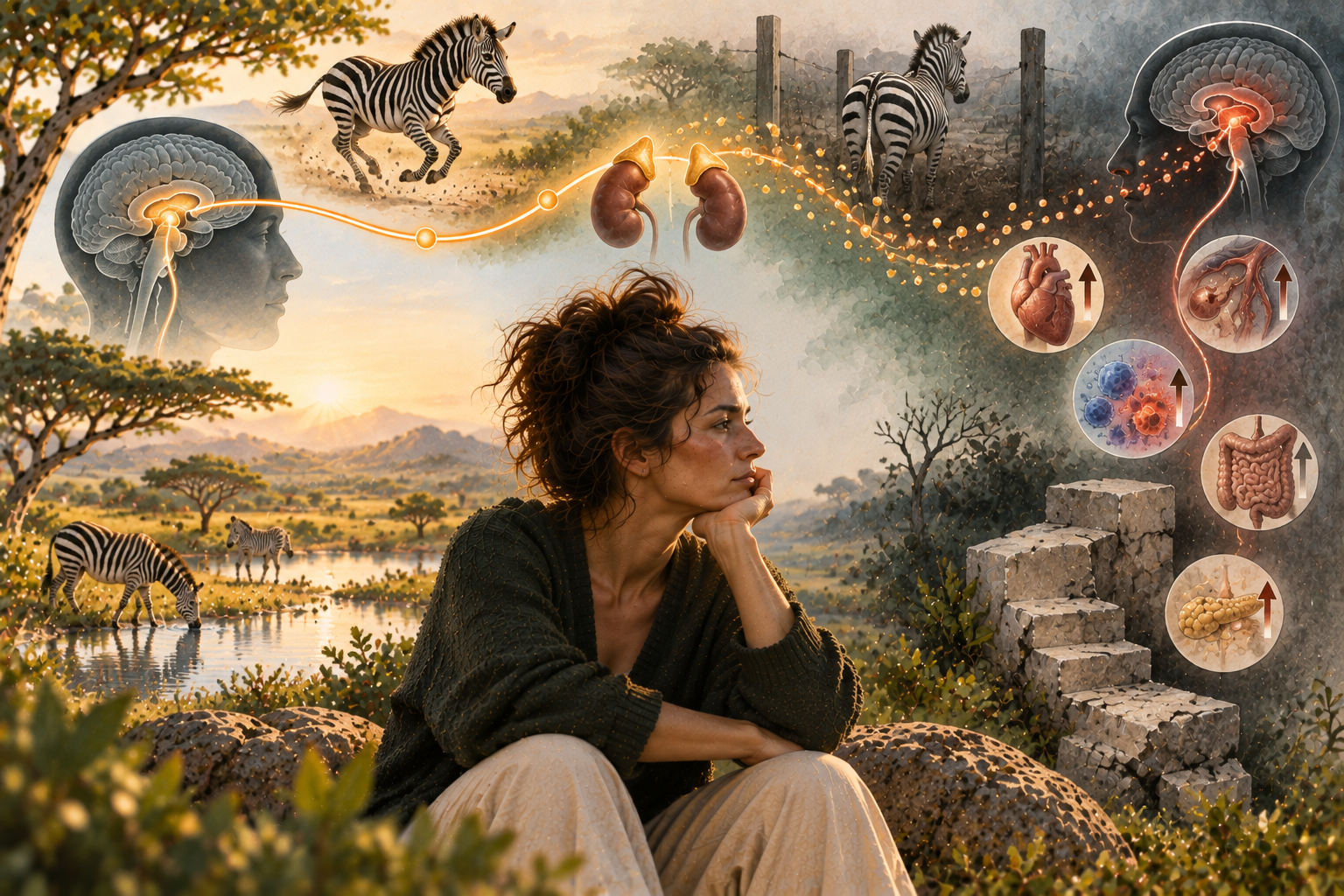
The acute stress response can save us from an immediate threat. In humans, the same mechanism can be activated by thoughts, expectations and conflicts—and remain active for too long.

Key ideas
- •Energy is rapidly directed towards muscles, heart and brain.
- •Digestion, growth, repair and reproduction are postponed.
- •Chronic activation raises vulnerability to disease but is not a single cause.
Glossary
Question for reflection
Which of my stressors require action now, and which mainly exist in thought?
Full chapter summary
Source of the summary: Robert Sapolsky — Why Zebras Don’t Get Ulcers, chapter 1.
Imagine it is two in the morning. You are lying in bed, covered in clammy sweat as you think about tomorrow's exam or an important report. Your brain takes a remarkable and cruel journey: from the fear of ruining your career to the certainty that you have a deadly tumour that justifies your panic. This is the world of human stress.
Now move to the savannah. A zebra runs as fast as it can to avoid becoming a lion's lunch, while the lion runs just as fast to avoid starvation. For them, stress is an acute physical crisis lasting only minutes. If the zebra escapes, its body immediately returns to rest.
This is the central human tragedy described in the first chapter: our bodies have a magnificent adaptation mechanism designed to save our skin in a short race across the savannah. Yet, being ‘smart enough’, we have learned to activate this powerful system through thought alone, worrying about mortgages or social status.
If homeostasis means maintaining an optimal oxygen level or temperature, allostasis is the complex coordination of the entire body to achieve balance. The problem is that we make the ‘elephants of stress’ jump onto the seesaw of our internal balance far too often.
A zebra does not develop ulcers from anticipating stress months in advance. A human, however, can become ill by activating the emergency rescue system for weeks or months. The stress response eventually becomes more destructive than the stressor itself.
The chapter's scientific history is told through the experiments of Hans Selye, the ‘father of stress’, who was not the most skilful laboratory worker and chased rats with a broom. He found that, regardless of the stimulus, the body produced a similar nonspecific response: ulcers, enlarged adrenal glands and atrophy of the immune system.
The chapter's conclusion: we live long and comfortably enough to suffer not only from infection or hunger, but also from illnesses associated with chronic worry. We are creatures capable of making ourselves ill simply by thinking about the future.
2Glands, Gooseflesh, and Hormones
Glands, Gooseflesh, and Hormones
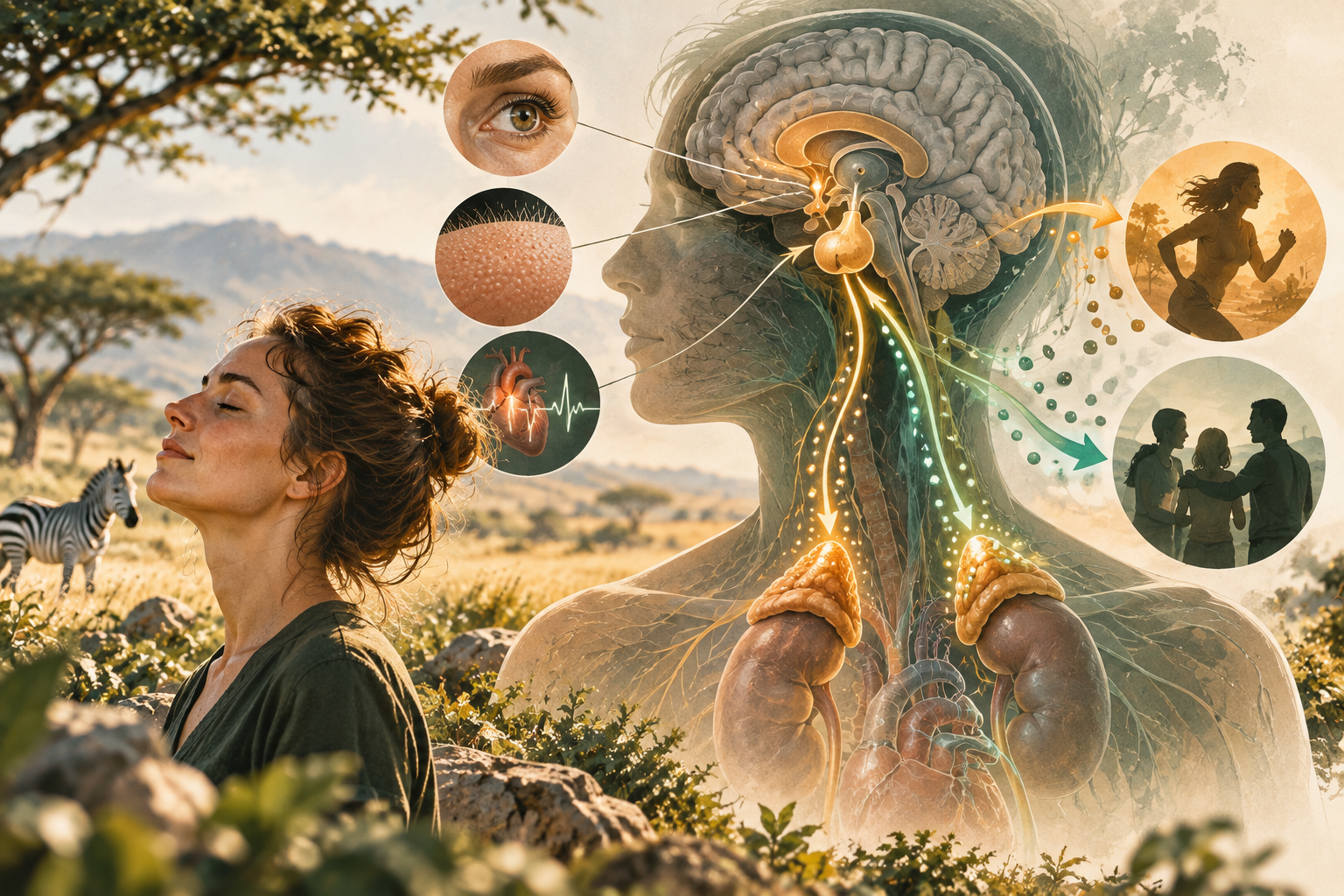
The brain coordinates stress through the autonomic nervous system and hormonal axes: a fast adrenaline pathway and a slower HPA-axis glucocorticoid pathway.
Key ideas
- •The sympathetic system mobilises; the parasympathetic system supports recovery.
- •Adrenaline acts quickly; glucocorticoids sustain the response.
- •A healthy response must switch off as well as switch on.
Glossary
Question for reflection
What helps my body recognise that the danger has ended?
Full chapter summary
Source of the summary: Robert Sapolsky — Why Zebras Don’t Get Ulcers, chapter 2.
Imagine sitting quietly in an armchair reading a book. Your body is still, but one vivid thought—an old hurt, a passionate date or an approaching deadline—makes your heart race and your palms grow damp. This is the magic of chapter two, revealing the hidden threads connecting our thoughts with every cell of our body.
At the centre of this mechanism is the autonomic nervous system, divided into two eternal antagonists:
- The sympathetic system is the ‘accelerator’. It instantly activates the fight-or-flight response, making hair stand on end and the blood surge with adrenaline.
- The parasympathetic system is the ‘brake’. It handles rest, sleep, digestion and recovery.
But nerves are merely fast messengers. Real power in the body belongs to hormones, and the sources have a story about the ‘great conductor’. Scientists long mistakenly considered the pituitary the ‘master gland’, but the dramatic rivalry between Roger Guillemin and Andrew Schally demonstrated that the true ruler is the hypothalamus. For years, these scientists processed tonnes of brains from slaughterhouses to find tiny amounts of the hormones through which the brain controls the body.
When the alarm sounds, the body's orchestra changes its tune:
1. The ‘soldiers’ are activated: the adrenal glands release adrenaline (acting over seconds) and glucocorticoids (sustaining the response for hours). The pituitary releases prolactin and vasopressin.
2. ‘Peacetime construction’ stops: the body shuts down costly, long-term activities. Insulin levels fall (energy is spent rather than stored), while reproductive hormones (oestrogen, progesterone, testosterone) and growth hormone are suppressed.
The sources emphasise that this storm is not always the same. Psychologist Shelley Taylor found that stress in women often triggers not aggression but ‘tend and befriend’, a mechanism aimed at strengthening social bonds.
Chapter conclusion: our hormonal system is a finely crafted instrument designed to save lives in a brief struggle. But if we make it play an alarm march for months, without letting the ‘brake’ engage, the symphony turns into a requiem for our health.
3Stroke, Heart Attacks, and Voodoo Death
Stroke, Heart Attacks, and Voodoo Death
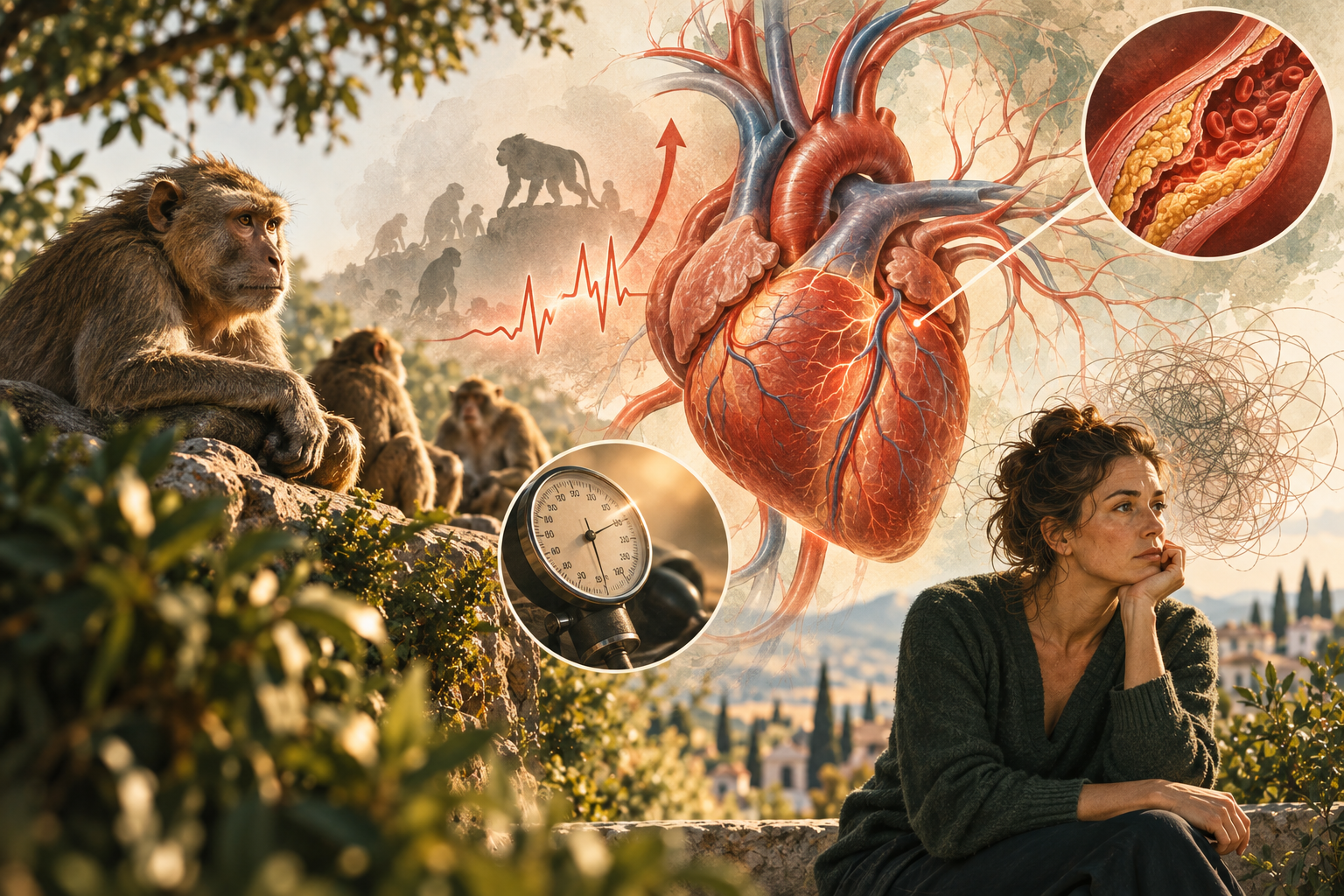
Stress increases cardiac work and blood pressure. When repeated continuously, an adaptive response becomes a burden on the cardiovascular system.
Key ideas
- •Chronic high blood pressure damages vessel walls.
- •Inflammation and atherosclerosis develop more easily at damaged sites.
- •Stress interacts with other risk factors rather than acting alone.
Glossary
Question for reflection
Which regular habits help my body complete its stress response?
Full chapter summary
Source of the summary: Robert Sapolsky — Why Zebras Don’t Get Ulcers, chapter 3.
Chapter three, ‘Stroke, Heart Attacks, and Voodoo Death’, examines how stress affects the cardiovascular system and why our response can become deadly.
These are the chapter's main ideas:
1. How the heart saves a life (the acute response)
In a physical crisis, such as encountering a lion, the body immediately reorganises cardiovascular activity. To do this, the brain:
- ‘Steps on the accelerator’: switches off the parasympathetic ‘brake’ and activates the sympathetic nervous system.
- Speeds up the rhythm: the heart beats faster and harder.
- Redistributes resources: arteries supplying working muscles widen, while blood flow to ‘secondary’ organs such as the intestines and skin falls sharply.
- Sheds ballast: to lighten the body for running, the body seeks to empty the bladder.
2. Chronic wear: when the ‘pump’ breaks
The human problem is activating this powerful mechanism not only when facing a lion, but also during psychological distress, such as a son's untidy room or a deadline.
- Hypertension: persistently high pressure wears down blood vessels. They become stiffer and thicker to withstand the force of blood, raising pressure further.
- Atherosclerosis: inflammation develops where high pressure has damaged blood vessels. Fats, glucose and ‘bad’ cholesterol begin sticking to these ‘potholes’, forming atherosclerotic plaques.
- C-reactive protein (CRP): Sapolsky notes that CRP levels, a marker of inflammation, predict heart disease much more accurately than cholesterol levels.
3. Cardiovascular catastrophes
Chronic stress prepares the ground for acute attacks:
- Heart attack and stroke: under blood pressure, a plaque can detach and block a narrow vessel in the heart (heart attack) or brain (stroke).
- Myocardial ischaemia: a healthy person's coronary vessels widen during stress, but in someone with disease they may paradoxically narrow, depriving the heart of oxygen when it is working at its limit.
- Sudden death: extreme stress can cause a fatal rhythm disturbance, ventricular fibrillation, in which the heart quivers chaotically without pumping blood.
4. Death from pleasure and ‘witchcraft’
The author emphasises that, for the heart, it does not matter whether the body's storm comes from grief or ecstatic joy, such as an orgasm or a big win—the load is the same. The chapter also discusses ‘voodoo death’, or psychophysiological death: a phenomenon in which someone dies following extreme social or psychological shock, such as a curse. Sapolsky explains it through excessive sympathetic activation leading to cardiac arrest.
Chapter conclusion
The cardiovascular system is a ‘smart’ mechanism, ideally adapted to a short sprint across the savannah. Yet chronic activation for purely psychological reasons turns it into an instrument of slow self-destruction, leading to hypertension, blocked vessels and sudden catastrophes.
4Stress, Metabolism, and Liquidating Your Assets
Stress, Metabolism, and Liquidating Your Assets
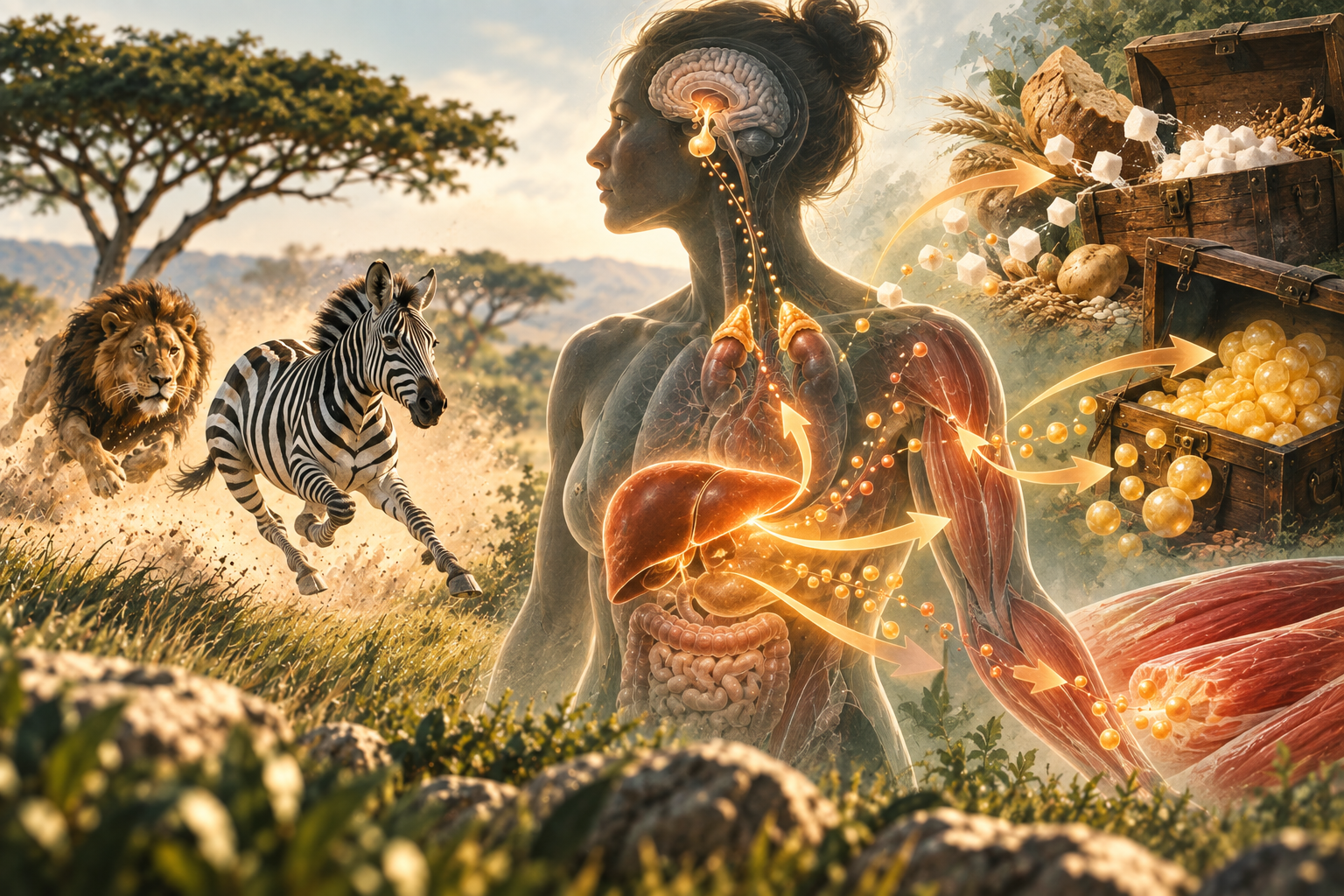
During threat, the body releases glucose and fatty acids for immediate action. When this becomes chronic, constant energy mobilisation carries a metabolic cost.
Key ideas
- •Energy stores are broken down instead of used for repair.
- •Frequent hormonal surges can reduce insulin sensitivity.
- •Stress can suppress appetite or increase cravings for calorie-dense food.
Glossary
Question for reflection
After stress, am I eating from hunger, fatigue or a need for comfort?
Full chapter summary
Source of the summary: Robert Sapolsky — Why Zebras Don’t Get Ulcers, chapter 4.
Chapter four, ‘Stress, Metabolism, and Liquidating Your Assets’, examines how the body manages energy reserves in a crisis and the price of constant ‘raids on the bank’.
1. The metabolic bank: how we store energy
Imagine your body as a complex financial system. After a substantial meal, while you rest on the sofa, your body accumulates ‘capital’. Simple ‘cash’—glucose, amino acids and fatty acids—is converted into complex ‘assets’:
- Glycogen (stored in the liver and muscles);
- Proteins (in muscles);
- Triglycerides (in fat cells).
The chief ‘banker’ managing these deposits and planning your metabolic future is insulin.
2. The stress response: urgent liquidation of assets
When a lion chases you, the body has no time for long-term investments. It must immediately turn accumulated property into ‘ready cash’—energy for the muscles.
1. Deposits stop: the sympathetic nervous system switches off insulin, the ‘banker’. Glucocorticoids block nutrient delivery to storage.
2. Assets are sold off: stress hormones—adrenaline, noradrenaline, glucagon and glucocorticoids—reverse the process, converting proteins, glycogen and fats back into amino acids, glucose and fatty acids and releasing them into the blood.
3. Gluconeogenesis: the liver urgently converts even amino acids into glucose, the most readily available fuel for saving your skin.
3. Why we become ill: the cost of chronic stress
The modern human problem is ‘liquidating assets’ because of anxious thoughts rather than to escape a lion.
- Chronic fatigue: constantly moving energy from storage into the blood and back is very costly. These manoeuvres consume so much energy that we tire more quickly.
- Myopathy (muscle atrophy): during months of stress, muscles constantly break down proteins and cannot recover fast enough, leading to wasting.
- Atherosclerosis: the tonnes of fat and glucose continually circulating because of stress eventually settle on damaged vessel walls, clogging them.
4. Diabetes and metabolic syndrome
The chapter explains the connection between stress and metabolic disorders:
- Type 1 diabetes: stress can accelerate the appearance of symptoms and worsen blood sugar control.
- Type 2 diabetes: this is a disease of insulin resistance. Persistent stress hormones tell cells to ignore insulin. Over time, a healthy person can develop diabetes.
- Metabolic syndrome (syndrome X): Sapolsky describes a ‘whole bouquet’ of mutually reinforcing problems—blood pressure, obesity, high blood sugar and cholesterol.
Chapter conclusion: chronic stress makes us constantly ‘withdraw money’ and keep it in the blood. Our metabolic banks empty (muscles atrophy), while blood vessels become clogged with this unused ‘rubbish’. We face allostatic load: bodily wear that can leave the body on the brink of catastrophe even when measured values remain formally normal.
5Ulcers, the Runs, and Hot Fudge Sundaes
Ulcers, the Runs, and Hot Fudge Sundaes
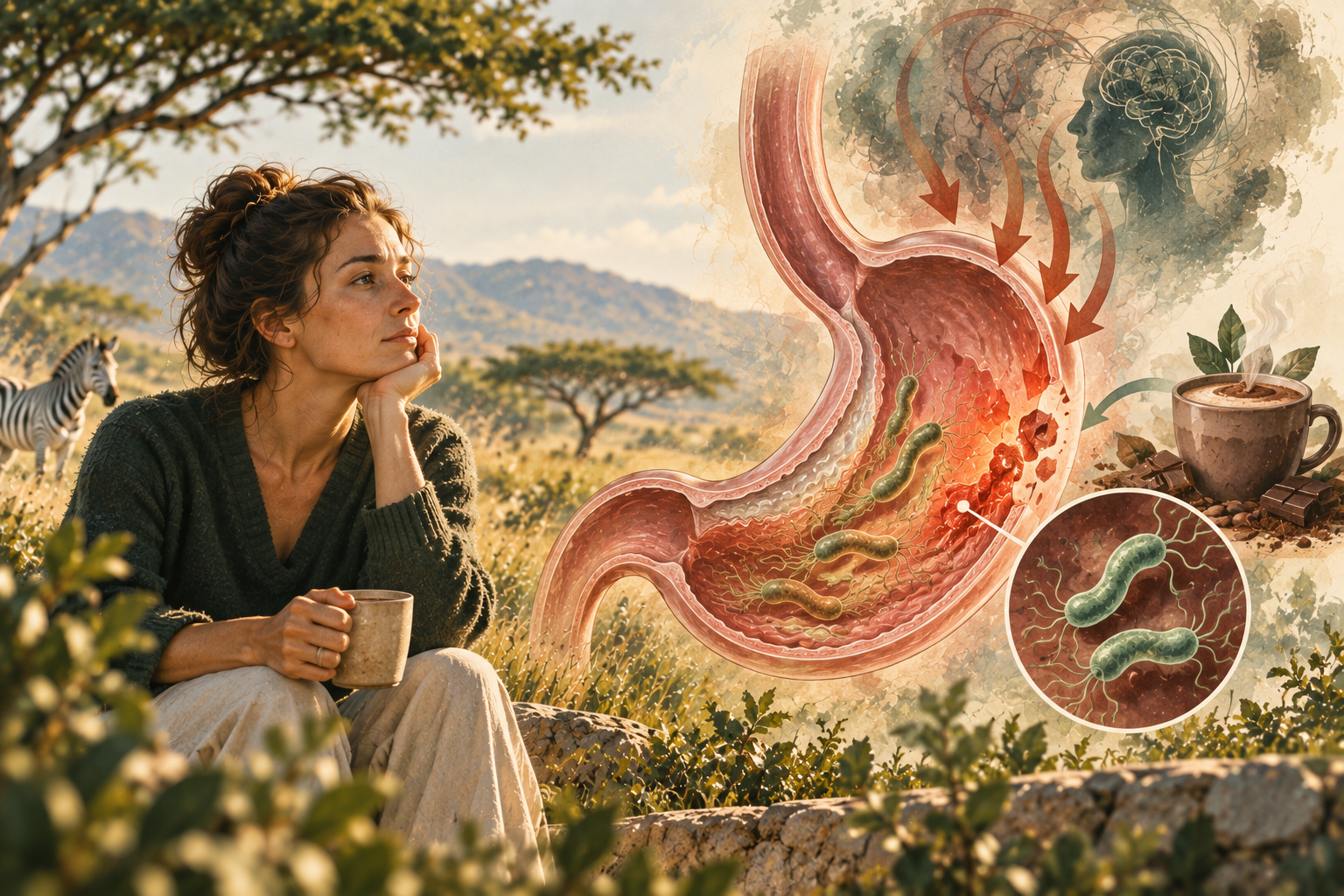
Stress changes digestive motility, secretion and blood flow. It does not explain every gastrointestinal disorder, but it can amplify vulnerability and symptoms.
Key ideas
- •Digestion loses priority during threat.
- •Helicobacter pylori is central to many ulcers.
- •The gut–brain axis makes symptoms sensitive to context.
Glossary
Question for reflection
Which situations intensify symptoms, and what changes when I feel safe?
Full chapter summary
Source of the summary: Robert Sapolsky — Why Zebras Don’t Get Ulcers, chapter 5.
Chapter five, ‘Ulcers, the Runs, and Hot Fudge Sundaes’, explores the complex relationships between stress, appetite, digestion and ulcer disease.
These are the main ideas:
1. Stress and food intake: why we eat (or do not eat)
Stress fundamentally changes eating behaviour, but not equally for everyone: two thirds of people eat more under stress and one third eat less. The summary explains this through competition between two hormones:
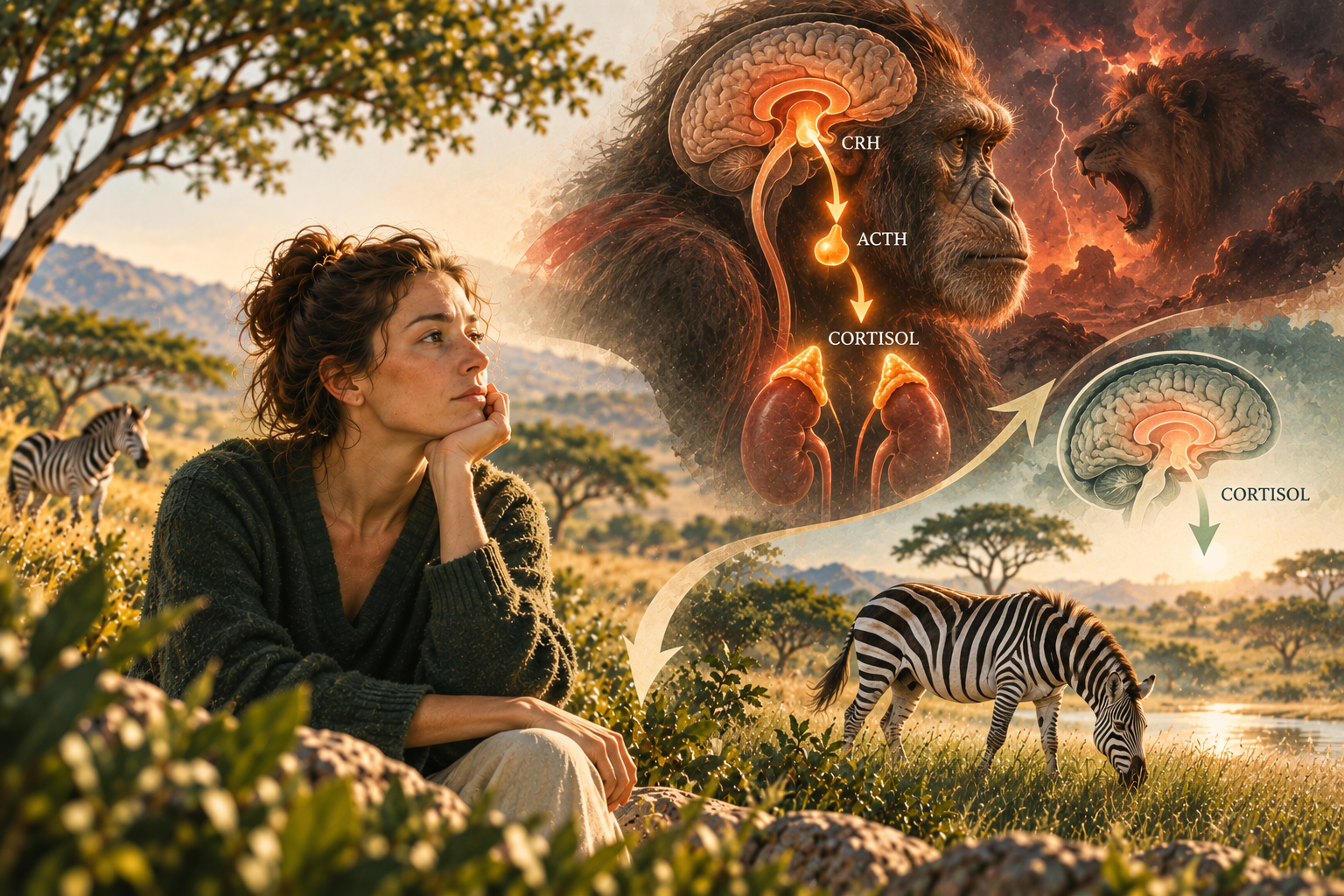
- CRH (corticotropin-releasing hormone) appears in the first seconds of stress and suppresses appetite so that eating does not consume energy while escaping a lion.
- Glucocorticoids act more slowly, over minutes and hours, and stimulate appetite, helping replenish energy after a crisis.
- Conclusion: brief, intense stress favours CRH and appetite disappears. Frequent small daily stressors—‘chronic psychological stress’—keep glucocorticoids high, encouraging constant snacking.
2. ‘Apples’ and ‘pears’: where fat goes
Glucocorticoids do more than increase appetite: they tell the body where to store fat. They promote abdominal fat, making a person ‘apple-shaped’.
- Abdominal fat is more hazardous because it more readily reaches the liver, increasing diabetes and heart disease risk.
- An interesting finding: ‘comfort food’, rich in fat and sugar, and abdominal fat accumulation really can reduce the brain's stress response, making people feel better at a cost to health.
3. Stress and the intestines
During acute stress, digestion shuts down because it is energy-intensive, using 10–20% of total energy.
- Why can fear cause diarrhoea? The body tries to shed ‘extra weight’ to run faster. The small intestine becomes inactive while the colon contracts vigorously, expelling contents before water can be absorbed.
- Irritable bowel syndrome (IBS) is a functional disorder highly sensitive to stress. Stress increases the gut's sensitivity to pain, and early childhood trauma can leave it vulnerable for life.
4. The puzzle of stomach ulcers
Ulcers were long attributed solely to stress. After Helicobacter pylori was discovered in the 1980s, medicine swung to the opposite extreme, dismissing stress. Sapolsky rejects both extremes: the bacterium matters, but infection alone does not explain every ulcer, and stress can interact with infection, medication and other risk factors.
Sapolsky’s explanation
How stress can contribute to ulcer vulnerability:
1. Acid rebound: during stress, the stomach's protective mucus and bicarbonate decrease to save energy. Afterwards, acid production resumes immediately but protection recovers slowly. During this recovery period the stomach begins digesting itself.
2. Reduced blood supply: inadequate blood flow causes tiny infarctions in the stomach wall.
3. Free radicals: when blood returns after stress, harmful substances are released that destroy cells.
4. Immune suppression: chronic stress can make it harder for the body to restrain Helicobacter pylori multiplication.
Chapter conclusion
Sapolsky’s conclusion is that stress does not directly cause peptic ulcer disease. Instead, it can help bring biological ‘villains’ into play, accelerating damage or weakening defence. His contrast with escaping a lion—and his image of repeatedly braking and accelerating digestion in response to psychological stress—shows why a response suited to a brief physical emergency can become harmful when repeatedly activated.
What current science adds
Current clinical evidence identifies Helicobacter pylori infection and the use of non-steroidal anti-inflammatory drugs (NSAIDs) as the major established causes of peptic ulcers. Stress can influence gastrointestinal secretion, blood flow, immune signalling, symptom perception and behaviour, and may modify vulnerability or outcomes in some circumstances. It is therefore not irrelevant, but it should not be presented as the single or primary general cause of peptic ulcer disease. This modern clinical hierarchy supplements Sapolsky’s interaction model; it is not presented as wording from the book.
6Dwarfism and the Importance of Mothers
Dwarfism and the Importance of Mothers
Growth is a long-term project. Under prolonged threat, energy shifts towards survival, and early-life stress can influence development.
Key ideas
- •Stress hormones can suppress growth-related processes.
- •Nutrition, care and emotional safety all matter.
- •Early experience influences sensitivity but does not dictate destiny.
Glossary
Question for reflection
What conditions allow a person not merely to survive, but to grow?
Full chapter summary
Source of the summary: Robert Sapolsky — Why Zebras Don’t Get Ulcers, chapter 6.
Chapter six, ‘Dwarfism and the Importance of Mothers’, examines how stress and the emotional environment influence growth from embryonic development through adulthood.
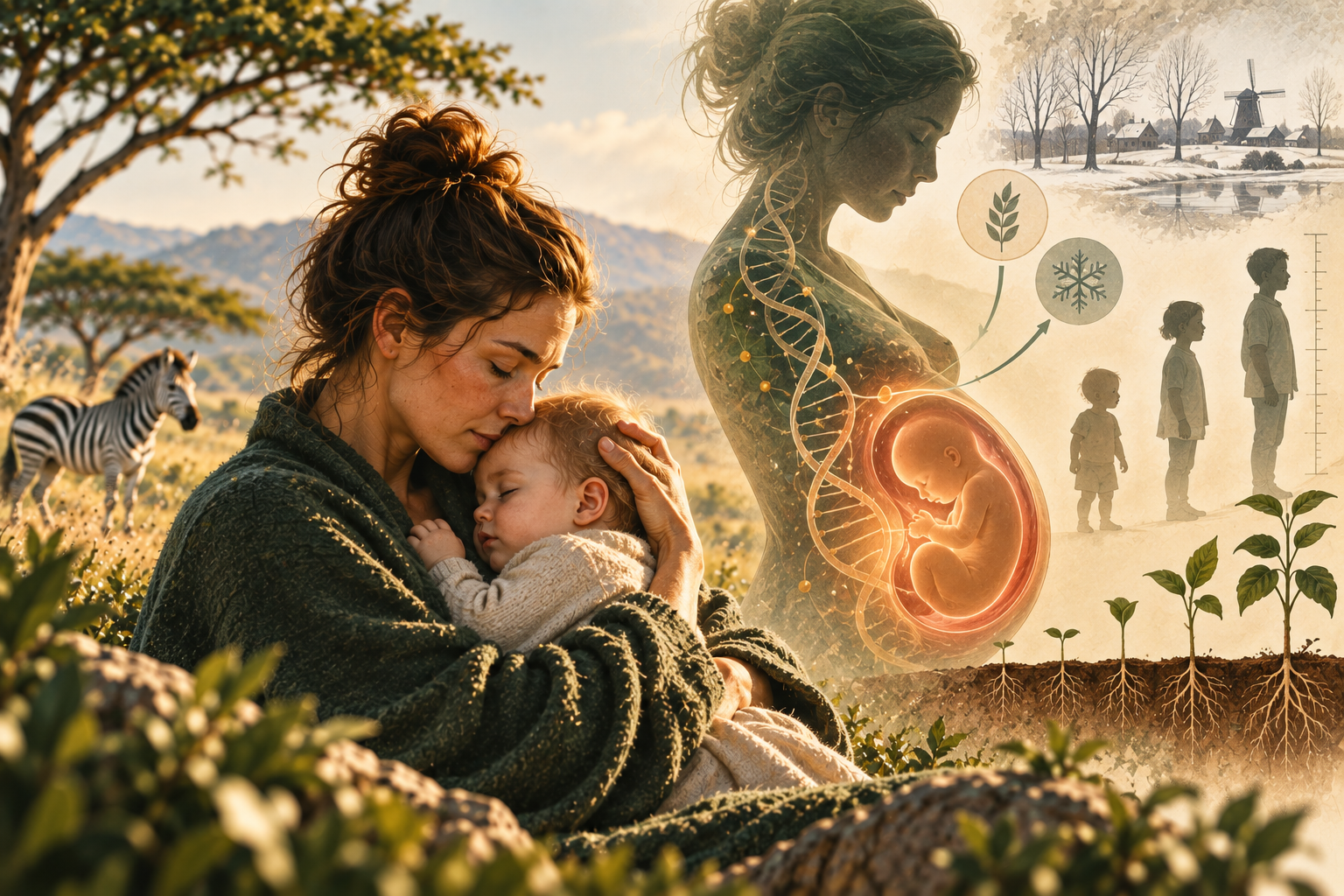
1. Prenatal stress and metabolic programming
Sapolsky’s explanation
Stress experienced during pregnancy can shape the child’s later biology through developmental or metabolic programming. The chapter uses this idea to show that the prenatal environment may have effects that extend far beyond birth.
- ‘Thrifty’ metabolism: if an embryo receives signals of famine or high stress through maternal glucocorticoids, its body learns to store nutrients as efficiently as possible.
- Consequences in Sapolsky’s account: developmental conditions can contribute to later vulnerability to hypertension, obesity, type 2 diabetes and cardiovascular disease.
- Brain and behaviour: Sapolsky distinguishes evidence from animals and humans. In prenatally stressed rats he describes lasting changes in amygdala systems related to anxiety and later memory problems; non-human primates also show memory and neural-development effects. Human studies discussed in the chapter found smaller head size at birth, but Sapolsky explicitly notes that its meaning for adult cognition is unclear and that prenatal and postnatal maternal anxiety are difficult to separate when studying later anxiety.
- Development across generations: Sapolsky follows a ‘thrifty metabolism’ through a concrete maternal-nutrition sequence. A female fetus exposed to undernutrition may grow into an adult whose metabolism retains nutrients efficiently; during her own pregnancy, her fetus may consequently receive fewer nutrients and develop a milder version of the same metabolic adaptation. The example explains continuity through the developmental environment without requiring a change in DNA sequence.
What current science adds
Prenatal stress exposure may be associated with later outcomes, but developmental programming is not destiny. In human studies, genetics, socioeconomic circumstances, parental health and behaviour, the postnatal environment and other confounding factors can contribute to the same associations. Findings therefore describe possible changes in average risk, not an inevitable lifelong mark on every child.
Maternal and fetal blood do not form one shared circulation. Their circulations remain distinct, while oxygen, nutrients, waste products and biochemical signals are exchanged across the placenta. Maternal stress signals can therefore influence the fetal environment without direct mixing of maternal and fetal blood.
Intergenerational and transgenerational effects must also be distinguished. When a pregnant F0 individual is exposed, the F1 fetus and the fetal germ cells that may later contribute to F2 can both be directly exposed. Findings in F1 or F2 are therefore not automatically evidence of true transgenerational inheritance. Human transgenerational epigenetic inheritance of stress effects is not firmly established and requires evidence that separates epigenetic transmission from genetic, social and environmental continuity.
2. Psychosocial dwarfism
Stress-related dwarfism is a striking example of psychological stress affecting growth.
- The phenomenon: children under severe emotional stress or deprived of love stop growing despite adequate nutrition. They have critically low somatotropin, or growth hormone.
- Mechanisms: besides low growth hormone, excessive sympathetic activity impairs intestinal nutrient absorption.
- Reversibility: removing the stressor—for example, changing the environment or the care staff to whom the child is attached—can allow astonishingly rapid catch-up growth.
3. Maternal care and touch
The sources emphasise that normal development requires ‘love’ in the biological sense: stimulation and touch.
- Harlow's experiments: rhesus monkeys with artificial ‘mothers’ chose the soft mother they could cuddle, rather than the one that provided food.
- Premature babies: Tiffany Field's research found that just 15 minutes of stroking three times daily made premature infants grow 50% faster and develop more actively.
- Deprivation: lack of maternal care in animals produces lifelong elevation of glucocorticoids and slows development of brain regions involved in learning and memory.
4. Growth functions in adults
Adults no longer grow taller, but they continue producing somatotropin.
- Bone repair: adult growth hormone supports continual renewal of bone tissue and ‘patching cracks’ in the body's foundation.
- Stress and osteoporosis: chronic stress and excess glucocorticoids block this renewal and can lead to osteoporosis and skeletal atrophy.
Chapter conclusion: growth depends not only on calories but also on psychological wellbeing. Lack of touch and emotional support can act as a powerful biological stressor and disrupt growth. These influences may be long-lasting, but outcomes are not inevitable: development remains plastic and trajectories differ between individuals.
7Sex and Reproduction
Sex and Reproduction
Reproduction requires energy and relative safety. Prolonged stress can disturb hormonal regulation, libido and fertility.
Key ideas
- •Stress can inhibit signals controlling the reproductive axis.
- •Effects depend on duration, intensity and individual context.
- •Expectations and relationships interact with physiology.
Glossary
Question for reflection
How do safety, intimacy and control change the body’s stress response?
Full chapter summary
Source of the summary: Robert Sapolsky — Why Zebras Don’t Get Ulcers, chapter 7.
The seventh chapter, “Sex and the Reproductive System”, explains why, during stress, our body treats reproduction as an unaffordable luxury, switching off sexual desire and reproductive functions to prioritise survival.
Here are the chapter’s main ideas:
1. Male physiology: testosterone and the puzzle of erections
During stress, testosterone production in men drops sharply. The body blocks the process at every level: endorphins switch off signals in the brain, prolactin reduces pituitary sensitivity, and glucocorticoids block the testes’ response. Stress has an even more dramatic effect on the mechanics of sex.
- Parasympathetic and sympathetic activity: A normal erection requires an active parasympathetic nervous system, responsible for rest and relaxation. Ejaculation, by contrast, is triggered by the sympathetic nervous system—the fight-or-flight response.
- Stress disrupts the system: During chronic stress, the sympathetic system is active and the parasympathetic system suppressed, resulting in impotence—the inability to achieve an erection. If an erection is already present and a stressful thought suddenly arises, the system can switch to sympathetic activity too quickly, causing premature ejaculation. Hyenas are an exception in nature: males paradoxically develop erections during stress and social submission, signalling submission to aggressive females.
2. Female physiology: depletion, prolactin and libido
The female reproductive system is equally vulnerable to physical and psychological crises.
Sapolsky’s explanation
- Fat, androgens and oestrogens: Sapolsky explains that fat tissue contains an enzyme that converts adrenal androgens into oestrogens. With starvation, very low body fat or exhausting training, less fat is available for this conversion; in the book’s account, oestrogen falls while androgen effects rise, contributing to menstrual disruption. He illustrates the pattern with young professional dancers and runners whose puberty may be delayed or whose periods become irregular or stop.
What current science adds
Functional hypothalamic amenorrhoea is now explained primarily through low energy availability—often together with a high exercise load—and psychological or physiological stress. These signals disrupt pulsatile gonadotropin-releasing hormone (GnRH) activity in the hypothalamus and alter the downstream hypothalamic–pituitary–ovarian axis. Androgen accumulation is not considered the primary general mechanism.
Sapolsky’s explanation
- Prolactin and the San breastfeeding example: Stress releases prolactin, a hormone that suppresses reproductive function and is also produced during breastfeeding. Sapolsky describes an anthropological example among San hunter-gatherers in the Kalahari: very short feeds lasting about one or two minutes, approximately every 15 minutes, around the clock, for about three years. In his explanation, this sustained pattern keeps prolactin elevated and suppresses ovulation.
What current science adds
The San example is an anthropological account of a particular breastfeeding pattern, not modern contraceptive guidance. The Lactational Amenorrhea Method (LAM) has high contraceptive effectiveness only while all its criteria are met: the mother remains amenorrhoeic, breastfeeding is exclusive or nearly exclusive according to the method’s criteria, and the infant is younger than six months. Once any criterion is no longer met, breastfeeding alone should not be treated as reliable contraception.
- Loss of libido: Stress suppresses the production of adrenal androgens and oestrogens, directly reducing sexual desire in women.
3. IVF and pregnancy loss
- Treatment-related stress: In vitro fertilisation (IVF) itself causes enormous stress through painful injections, hormonal swings and anxious waiting. The higher the stress and glucocorticoid levels during an IVF cycle, the lower the probability of success.
- Pregnancy loss in Sapolsky’s physiological model: The chapter discusses sympathetic vasoconstriction, reduced uterine blood flow and possible fetal hypoxia as a pathway through which severe stress might affect pregnancy.
What current science adds
Pregnancy loss is multifactorial. Observational studies report associations between substantial stress and some adverse pregnancy outcomes, but these data do not establish a simple universal chain from stress to vasoconstriction, fetal hypoxia and miscarriage. Proposed physiological pathways can add context to Sapolsky’s model without implying inevitability or personal blame; this is educational information, not individual medical advice.
Chapter conclusion
Stress can disrupt reproduction in many ways. Yet the basic, primitive drive to reproduce is remarkably resilient: studies show that even under the horrific conditions of concentration camps, roughly half of women continued to menstruate. The biological drive to reproduce withstands enormous strain. The finer aspects of sexuality—libido, romantic attraction, pleasure and relaxation—are nevertheless fragile and can be disrupted by psychological stress.
8Immunity, Stress, and Disease
Immunity, Stress, and Disease
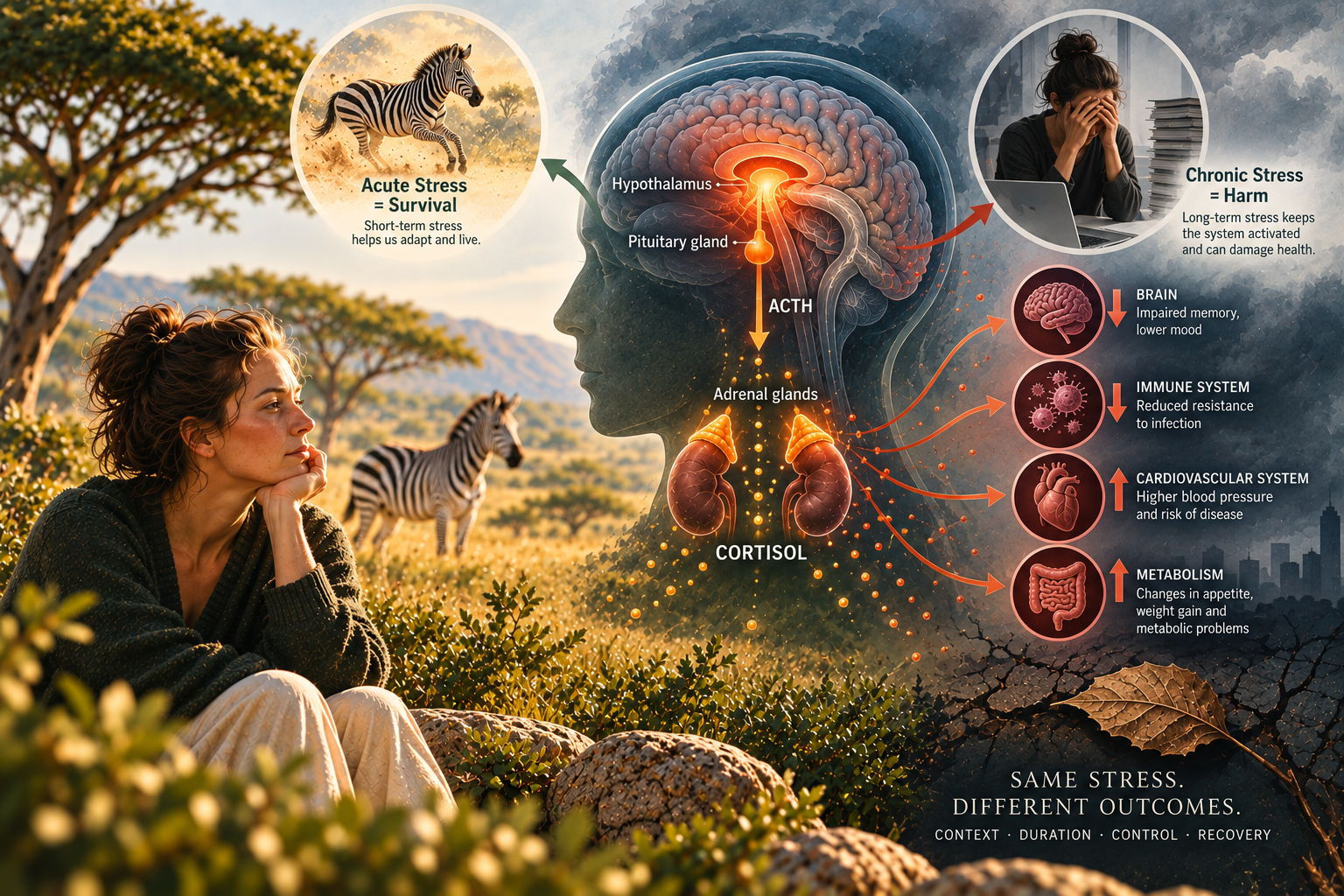
The relationship is more complex than “stress weakens immunity”. A brief response may mobilise defence, while chronic stress can disrupt regulation and sustain inflammation.
Key ideas
- •The immune response changes over time.
- •Chronic stress can impair healing and inflammatory control.
- •Disease risk reflects stress, biology, behaviour and environment together.
Glossary
Question for reflection
Why is it more accurate to say that stress alters immune regulation?
Full chapter summary
Source of the summary: Robert Sapolsky — Why Zebras Don’t Get Ulcers, chapter 8.
The eighth chapter, “Immunity, Stress, and Disease”, introduces psychoneuroimmunology, the study of the remarkable connections between our thoughts, brain and immune defences.
The chapter challenges popular myths about stress and illness, explaining how we become vulnerable to infections and why “positive thinking” does not cure cancer. These are its main concepts:
1. Immune swings: a surprise for scientists
For a long time, stress was thought simply to suppress immunity to save energy. More recent discoveries, however, revealed a much more complex response:
- Activation phase: During the first 30 minutes of stress, immunity does not decline but increases sharply. Stress hormones, including glucocorticoids and adrenaline, do not deactivate immune cells; they urgently move them from the blood to the frontline, such as the skin, so wounds can heal faster after injury.
- Suppression phase: If stress persists, glucocorticoids begin selectively destroying lymphocytes—immune cells—starting with the oldest and least useful.
- Why suppress immunity? Scientist Allan Munck found that the body deliberately brakes the immune system after its initial mobilisation to prevent an excessive response. If hyperactive immunity is not switched off, it may confuse the body’s own tissues with foreign ones, leading to autoimmune diseases such as multiple sclerosis or rheumatoid arthritis. Failure of this braking system increases autoimmune risk.
2. Pathways to illness
Why do we get ill more often under stress? Sapolsky distinguishes two pathways:
- The psychoneuroimmune pathway: Stress releases hormones that physiologically suppress immunity and increase the likelihood of infection.
- The lifestyle pathway: Under stress or depression, people sleep and eat poorly, forget medication or fail to wear a warm coat in freezing weather. Often it is the stress-related change in lifestyle, rather than the hormones themselves, that causes illness.
3. Colds, herpes and the ingenuity of viruses
- Common colds: Epidemiological evidence and experiments confirm that chronic stress increases the risk of catching a cold.
- Latent viruses: Herpes viruses hide in nerve cells for years, waiting for an opportunity to multiply. How do they detect weakened immunity? Their DNA contains a special sensor that responds to increased blood glucocorticoids. Herpes can also perform a remarkable trick: it stimulates the hypothalamus to produce stress hormones, creating favourable conditions for a flare-up.
4. Cancer and the mythology of miracle cures
Perhaps the most challenging part concerns stress and cancer. In animals, severe stress can accelerate the growth of existing tumours because glucocorticoids promote blood-vessel growth into them—angiogenesis—and supply glucose. In humans, however, there is no reliable evidence that stress causes cancer.
Sapolsky sharply criticises physicians such as Bernie Siegel, author of Love, Medicine and Miracles, who claim that cancer results from insufficient spirituality and can be cured by love and courage alone. This approach is cruel because it blames the victim for incurable illness: if the patient dies, they supposedly did not want to live enough or did not love enough. Cancer is an enormously complex biological problem, not punishment for an incorrect psychological attitude.
5. A historical tragedy: status thymicolymphaticus
The chapter ends with the tragic story of a medical disaster caused by overlooking stress. In the nineteenth century, doctors autopsying infants from poor families—whose chronic stress had shrunk their thymus glands—assumed that a tiny thymus was normal. When a child from a wealthy family died of sudden infant death syndrome, a normal, larger thymus led doctors to diagnose the imaginary disease status thymicolymphaticus. Believing that a healthy thymus compressed the windpipe, they widely prescribed neck irradiation for infants. This caused tens of thousands of thyroid cancers in the twentieth century, stemming from a failure to understand how poverty and stress affect anatomy.
Chapter conclusion: Our immunity is finely tuned to brief stressful crises but vulnerable to chronic anxiety. At the same time, we should avoid extremes and not attribute every human illness exclusively to psychological stress.
9Stress and Pain
Stress and Pain
Pain warns of danger, but its perception depends on context. Acute stress can temporarily dampen pain, while prolonged anxiety can intensify distress.
Key ideas
- •Fast and slow nerve fibres carry different components of pain.
- •Endogenous opioids contribute to stress-induced analgesia.
- •The brain and emotional state influence the experience of pain.
Glossary
Question for reflection
How do safety, attention and anxiety change our experience of pain?
Full chapter summary
Source of the summary: Robert Sapolsky — Why Zebras Don’t Get Ulcers, chapter 9.
The ninth chapter, “Stress and Pain”, begins by asking why pain exists at all. Sapolsky explains that pain is a vital warning of danger.
Sapolsky’s explanation
In the checked Russian 2015 translation, people who do not feel injuries are described using the term ‘pain asymbolia’. Sprains, burns or even the loss of a toe may go unnoticed, illustrating how dangerous life becomes when pain no longer performs its warning function. The available source does not establish whether this terminology originated with Sapolsky or with the translation.
What current science adds
Pain asymbolia and congenital insensitivity to pain are separate conditions. In pain asymbolia, a noxious event may be recognised as pain, but its usual unpleasant, threatening or affective significance is markedly reduced or altered. Congenital insensitivity to pain is a distinct group of rare conditions in which nociceptive pain perception is absent or severely impaired because of underlying biological or genetic mechanisms, creating a high risk of unnoticed injury.
These are the chapter’s main concepts and mechanisms:
1. Pain mechanics: fast and slow fibres
Pain information reaches the spinal cord through two types of nerve fibres:
Sapolsky’s explanation
- Fast signalling carries sharp, sudden pain and helps trigger rapid withdrawal from danger. In the book’s simplified gate model, this pathway also recruits an inhibitory spinal interneuron that quickly limits the signal.
- Slower signalling carries prolonged, diffuse or throbbing pain and, in Sapolsky’s account, encourages immobility while tissue heals. The chapter explains that massage or rubbing an injury, and scratching around an insect bite, can briefly recruit the faster pathway and ‘close the gate’ to the continuing pain signal. Sapolsky also applies this model to diabetic neuropathic pain, where damage to the faster pathway is presented as reducing this inhibitory control.
What current science adds
The modern clarification refines this simplified fibre description rather than discarding the educational idea of gating. Rubbing an injury adds non-nociceptive tactile input, particularly through large-diameter Aβ afferents, rather than mainly activating ‘fast pain fibres’. In the gate-control model, this input can recruit inhibitory circuitry in the spinal cord and modulate transmission from nociceptive Aδ and C fibres—temporarily ‘closing the gate’. This is an explanatory model of pain modulation, not an absolute on–off switch; persistent and diabetic neuropathic pain involve more complex mechanisms.
2. Pain’s subjectivity and the brain
The brain does not passively receive pain signals; it actively interprets them according to context. A severely wounded soldier may request painkillers much less often than a civilian with the same injury in peacetime. Studies also found that patients with a window overlooking trees needed fewer painkillers than those looking at a blank wall.
3. Stress-induced pain relief: analgesia
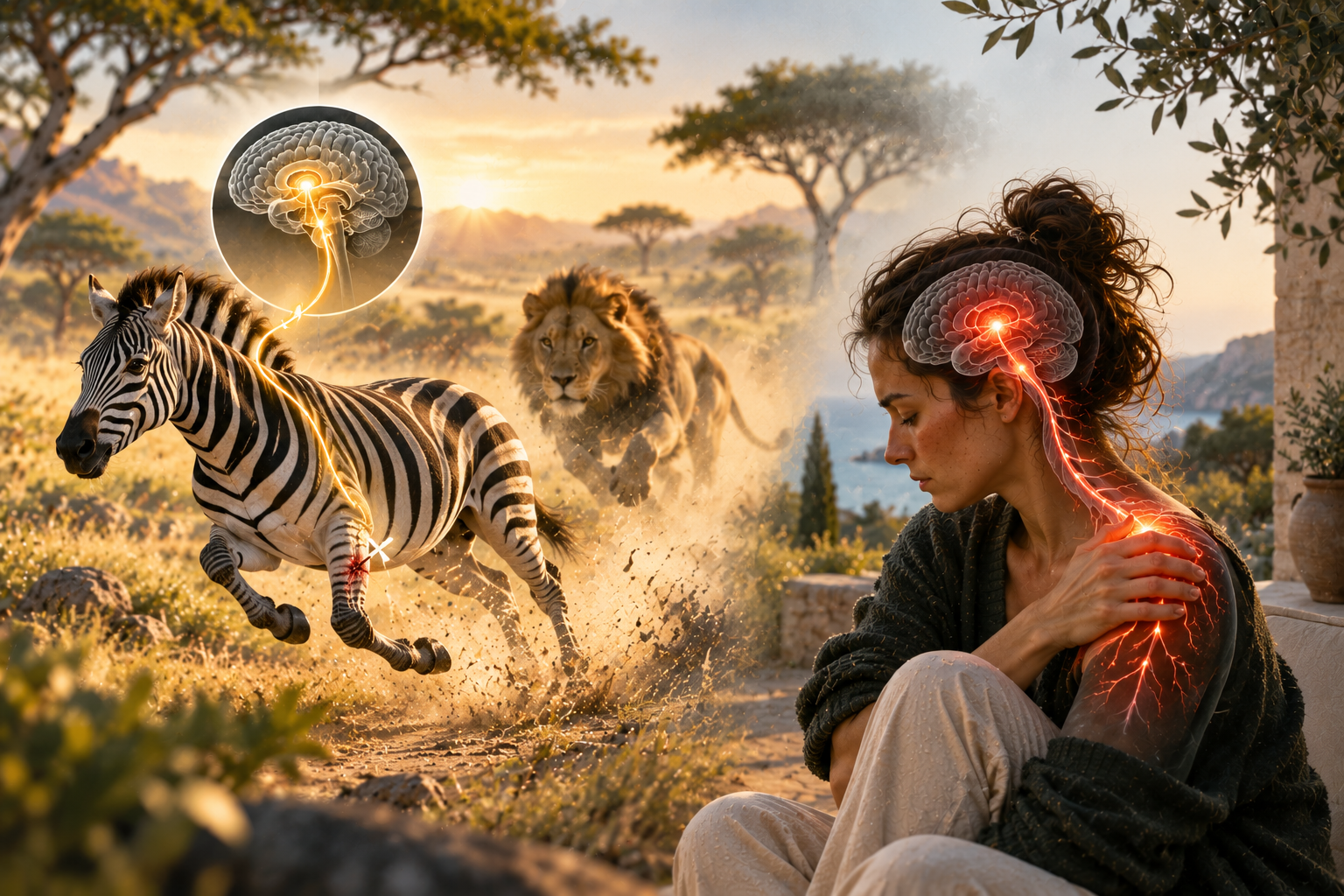
During acute stress—in battle, while escaping a predator or during sport—the body can temporarily block pain completely. It releases endogenous opioids, including endorphins and enkephalins, which bind to receptors in the brain and spinal cord and interrupt pain signals.
- This mechanism explains the famous runner’s high and much of how acupuncture works.
- The placebo effect also works through the brain’s release of opioids. Giving an opioid-receptor blocker such as naloxone stops the placebo from working.
4. Stress-induced sensitivity to pain
Sometimes stress does the opposite and makes us more vulnerable to pain. The physical signal itself does not increase; our emotional response changes. The amygdala, a centre for fear and anxiety, plays a key role. Anxiety makes the same sensations feel more distressing. Sapolsky discusses fibromyalgia, a puzzling chronic pain syndrome. Doctors long dismissed it as a purely psychosomatic neurosis, but newer findings show heightened activity in emotional brain centres, altered glucocorticoid levels and more of a pain-signalling substance in cerebrospinal fluid.
5. Chronic stress and depletion
Sapolsky highlights a distinctive feature of the pain-relief system. Unlike stress responses such as hormone production, which can fail to stop and eventually harm the body, stress-induced analgesia cannot operate indefinitely. Prolonged stress rapidly depletes endogenous opioid stores. Pain relief is therefore a temporary emergency measure. If stress continues, pain inevitably returns.
10Stress and Memory
Stress and Memory
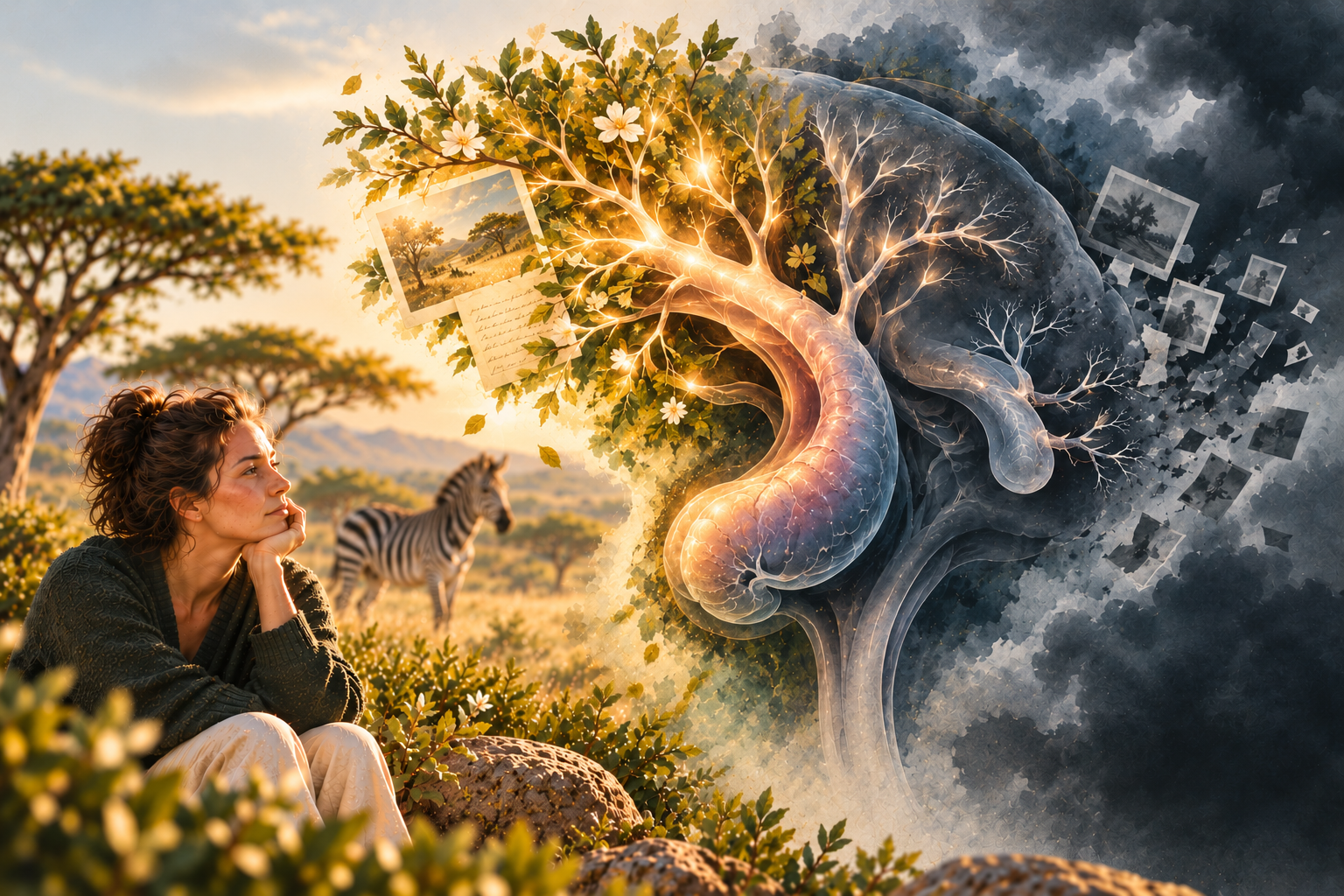
Brief, moderate stress can help us remember. Severe or prolonged stress can make learning and retrieving memories harder.
Key ideas
- •Declarative memory differs from memory for skills.
- •The stress–memory relationship follows an inverted U.
- •The hippocampus is sensitive to prolonged stress.
Glossary
Question for reflection
How can we find a level of challenge that helps learning rather than hindering recall?
Full chapter summary
Source of the summary: Robert Sapolsky — Why Zebras Don’t Get Ulcers, chapter 10.
Imagine remembering every detail of the day you learned that the Twin Towers had fallen, or the seconds when you narrowly avoided a car crash, yet being unable to remember breakfast two days ago. Chapter ten, “Stress and Memory”, explores this paradox: why stress can dramatically sharpen memory or destroy it.
1. The architecture of memory
Sapolsky begins by explaining that memory is not a single system. A key distinction separates explicit, declarative memory—facts, events and names—from implicit, procedural memory—skills such as cycling or playing tennis. The hippocampus plays a central role in explicit memory.
Memories are not stored in single neurons but distributed across extensive neural networks. Learning occurs when synapses cross a nonlinear excitation threshold, aided by the neurotransmitter glutamate, producing a moment of insight.
2. How stress improves memory: the inverted U
The relationship between stress and memory follows an inverted U. Brief, moderate stress lies on the rising part of the curve, improving memory and concentration.
The sympathetic nervous system releases adrenaline and noradrenaline, while moderate glucocorticoid levels increase glucose delivery to the brain, supplying neurons with more energy. Sensory receptors become more sensitive, and emotionally charged events are burned into memory. Evolutionarily, this is essential: when facing a threat, we need to remember how we got into danger and how to escape.
3. Chronic stress as a destroyer
If stress becomes too intense or lasts for months, the inverted-U curve drops sharply. Memory, especially retrieval of past information, begins to fail. This is particularly apparent in patients with Cushing’s syndrome, which produces excessive stress hormones, or in people taking synthetic glucocorticoids for long periods.
Chronic stress harms the hippocampus on several levels:
- Loss of connectivity: Neuronal extensions—axons and dendrites—shrink and deteriorate, making synaptic networks less complex. Memories do not disappear, but become much harder to access.
- Suppressed neurogenesis: Adult brains were long thought unable to create new cells, but this process was found in the hippocampus. Stress and glucocorticoids strongly inhibit the birth of new neurons.
- Energy deprivation and cell death: After about 30 minutes of continuous stress, glucose delivery to the hippocampus starts to fall, by as much as 25%. Energy-deprived neurons become highly vulnerable: a stroke or minor injury at this point kills more cells. Very prolonged exposure to high stress-hormone levels can kill hippocampal neurons through glucocorticoid neurotoxicity.
4. Physical brain shrinkage in humans
The chapter concludes with troubling findings extending animal research to humans. MRI studies show that conditions associated with severe chronic stress can involve reduced hippocampal volume. Such atrophy is observed in post-traumatic stress disorder (PTSD), prolonged major depression, flight attendants repeatedly crossing time zones with chronic disruption of body rhythms, and normal ageing in older people whose cortisol levels rise over time.
Chapter conclusion: Moderate stress is an ally that helps the brain perform well and record important experiences. But keeping this emergency system active for days and months because of psychological worries can make neural networks shrink and deteriorate, restricting access to our memories.
11Stress and a Good Night’s Sleep
Stress and a Good Night’s Sleep
Sleep loss increases stress, while stress disrupts restorative sleep.
Key ideas
- •Sleep has distinct phases.
- •Sleep helps consolidate memory.
- •Stress and sleep loss form a vicious circle.
Glossary
Question for reflection
What in my routine helps break the stress–sleep-loss cycle?
Full chapter summary
Source of the summary: Robert Sapolsky — Why Zebras Don’t Get Ulcers, chapter 11.
Chapter eleven, “Stress and a Good Night’s Sleep”, explores the close relationship between the nervous system and rest. Its central idea is a vicious circle: sleep deprivation causes stress, and stress causes sleep deprivation.
These are the chapter’s main concepts:
1. The architecture of sleep and why we sleep
Sleep is not uniform. It consists of cycles with different phases:
- Deep, slow-wave sleep: Brain metabolism decreases and the arousal system switches off. This is when the brain replenishes its energy reserves.
- Rapid eye movement (REM) sleep: This is the time of dreams. Brain metabolism, particularly in the emotional limbic system and visual centres, rises sharply and can exceed waking levels. Meanwhile, the frontal cortex, responsible for logic and impulse control—our “superego”—becomes less active. This helps explain why dreams are so illogical, absurd and emotional. Sleep also plays a crucial role in memory consolidation, organising the day’s new information and helping us solve difficult problems.
2. Sleep deprivation as a stressor
Normally, deep sleep switches off the sympathetic fight-or-flight system and reduces glucocorticoid stress hormones. When we deprive ourselves of sleep, this mechanism fails: glucocorticoids rise and sympathetic activity continues. Night and shift work therefore conflict with our biology and, over time, increase the risk of cardiovascular disease, immune problems and other stress-related illnesses. Sapolsky describes flight attendants allowed only five recovery days between transcontinental journeys: they showed poorer memory, persistently high glucocorticoids and reduced volume in the temporal region of the brain, including the hippocampus.
3. Stress disrupts sleep
Evolutionarily, sleeping when danger is nearby—for instance, a prowling lion—is a bad idea.
- Corticotropin-releasing hormone (CRH), a principal stress-response hormone, directly suppresses sleep and keeps the brain alert.
- Physical stress responses, such as a racing heart driven by sympathetic activity, prevent the body from relaxing.
- Even if we fall asleep, stress disrupts sleep architecture. Sleep becomes fragmented, with less restorative slow-wave sleep, leaving us exhausted on waking. Excess stress hormones during sleep also interfere with memory consolidation.
4. Anticipating stress while asleep
The chapter ends with a striking finding: the sleeping brain can track time and anticipate stress. In one experiment, participants were told they would be woken at 6 a.m., earlier than they wanted. Their brains prepared for the unpleasant event in advance: blood stress hormones began rising at 5 a.m.
Chapter conclusion: Sleep is not simply switching off; it is a complex recovery process. Stress disrupts it and deprives us of deep sleep. The resulting sleep loss is itself a powerful stressor, completing a destructive cycle.
12Ageing and Death
Ageing and Death
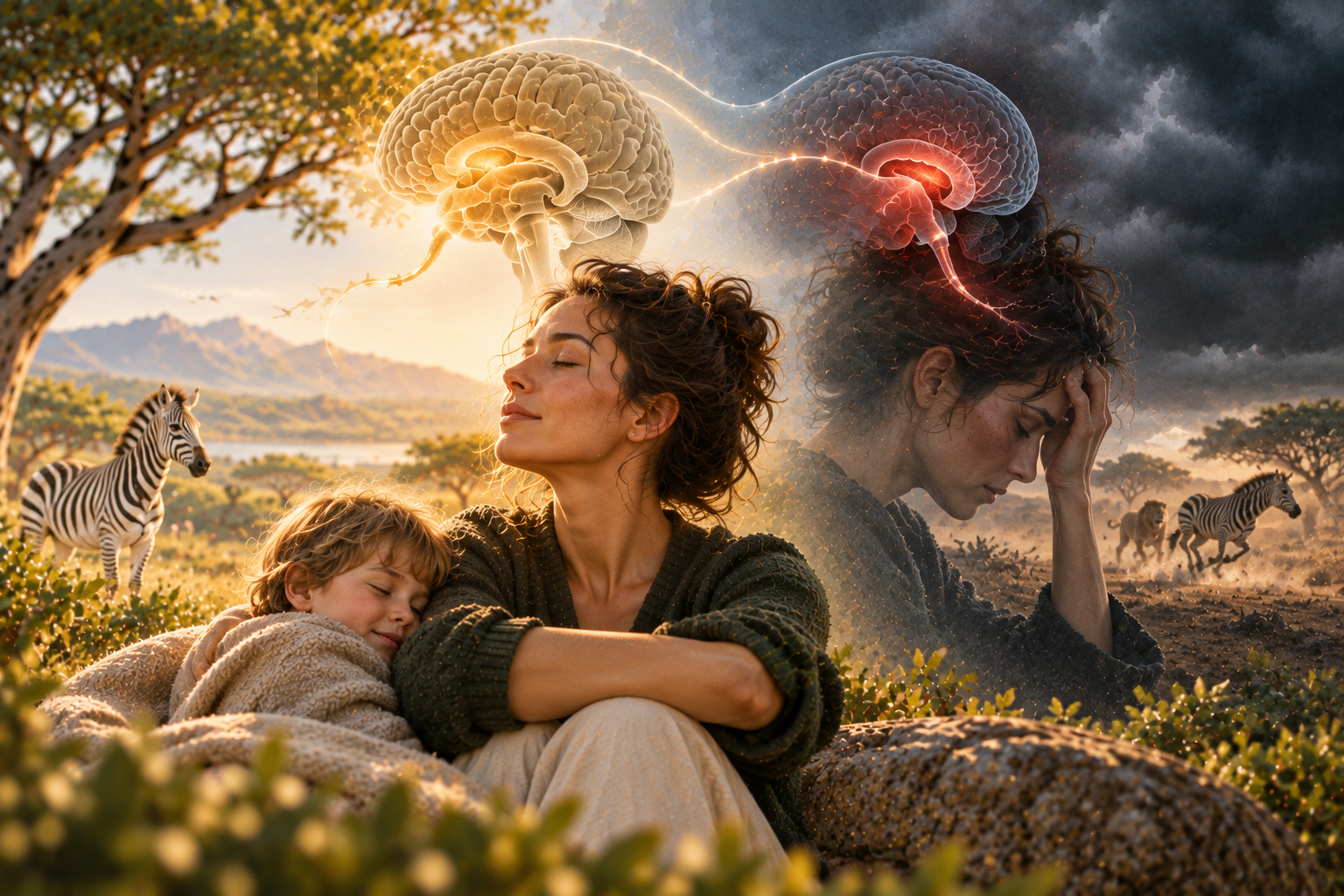
Age changes recovery from stress, but successful ageing remains possible.
Key ideas
- •Ending the stress response matters.
- •The hippocampus supports hormonal feedback.
- •Ageing varies greatly between individuals.
Glossary
Question for reflection
What helps preserve connection, curiosity and recovery as we age?
Full chapter summary
Source of the summary: Robert Sapolsky — Why Zebras Don’t Get Ulcers, chapter 12.
Chapter twelve, “Ageing and Death”, examines the relationship between ageing and our ability to handle stress, asking why some people age well while others decline rapidly.
These are the main concepts and mechanisms:
1. Views of old age: from dread to wisdom
Sapolsky contrasts Western depictions of old age as decline, dementia and helplessness with traditional societies, such as the Maasai, where older people become respected elders without a panicked fear of death. Gerontologists increasingly describe successful ageing: many older adults retain a good quality of life and social connections, and even report greater happiness than younger people.
2. Failure of the stress-response brakes
Our ability to manage stress changes with age. The difficulty is not only starting an appropriate response, but also switching it off in time.
- Older people, like older rats and monkeys, take much longer to reduce adrenaline, noradrenaline and glucocorticoids after a stressful event.
- Even at complete rest, baseline stress-hormone levels are often elevated in older individuals.
3. A vicious circle: the glucocorticoid cascade
Why does regulation fail? The hippocampus is central: besides supporting memory, it acts as a sensor signalling that glucocorticoid production should stop.
- Stress and glucocorticoids themselves damage hippocampal neurons.
- A degenerative loop develops: a damaged hippocampus cannot brake the stress response, so more hormones are released, causing further damage.
- In humans, severe past stress or synthetic glucocorticoid use can aggravate the process. Ageing with loss of memory, reason and identity is what frightens us most.
4. Wear and tear and the cost of chronic stress
Sapolsky mentions Max Rubner’s early twentieth-century theory that every organism has a fixed metabolic energy allowance, or a lifetime quota of heartbeats. Although simplified, the wear-and-tear concept describes stress well. Chronic stress and persistent allostatic load accelerate bodily wear, raising the risk of diseases associated with ageing: type 2 diabetes, hypertension, osteoporosis and reduced immunity.
5. Extreme ageing in the wild
To illustrate how glucocorticoids can cause rapid ageing and death, Sapolsky discusses Pacific salmon and Australian marsupial mice. After spawning or mating, hormonal regulation fails and enormous amounts of glucocorticoids are released. Within days, immunity collapses, ulcers develop and the animals deteriorate dramatically. Removing the salmon’s adrenal source of glucocorticoids is described as extending life by a year. This illustrates how extreme stress-hormone exposure can implement programmed death.
Chapter conclusion
The hopeful message is that a glucocorticoid cascade and brain deterioration are not inevitable. Many people, and even laboratory rats, age without memory loss or glucocorticoid dysregulation. The chapter bridges to the book’s second half, exploring how individual differences and stress management can help us avoid these effects and age successfully.
13Why Is Psychological Stress Stressful?
Why Is Psychological Stress Stressful?
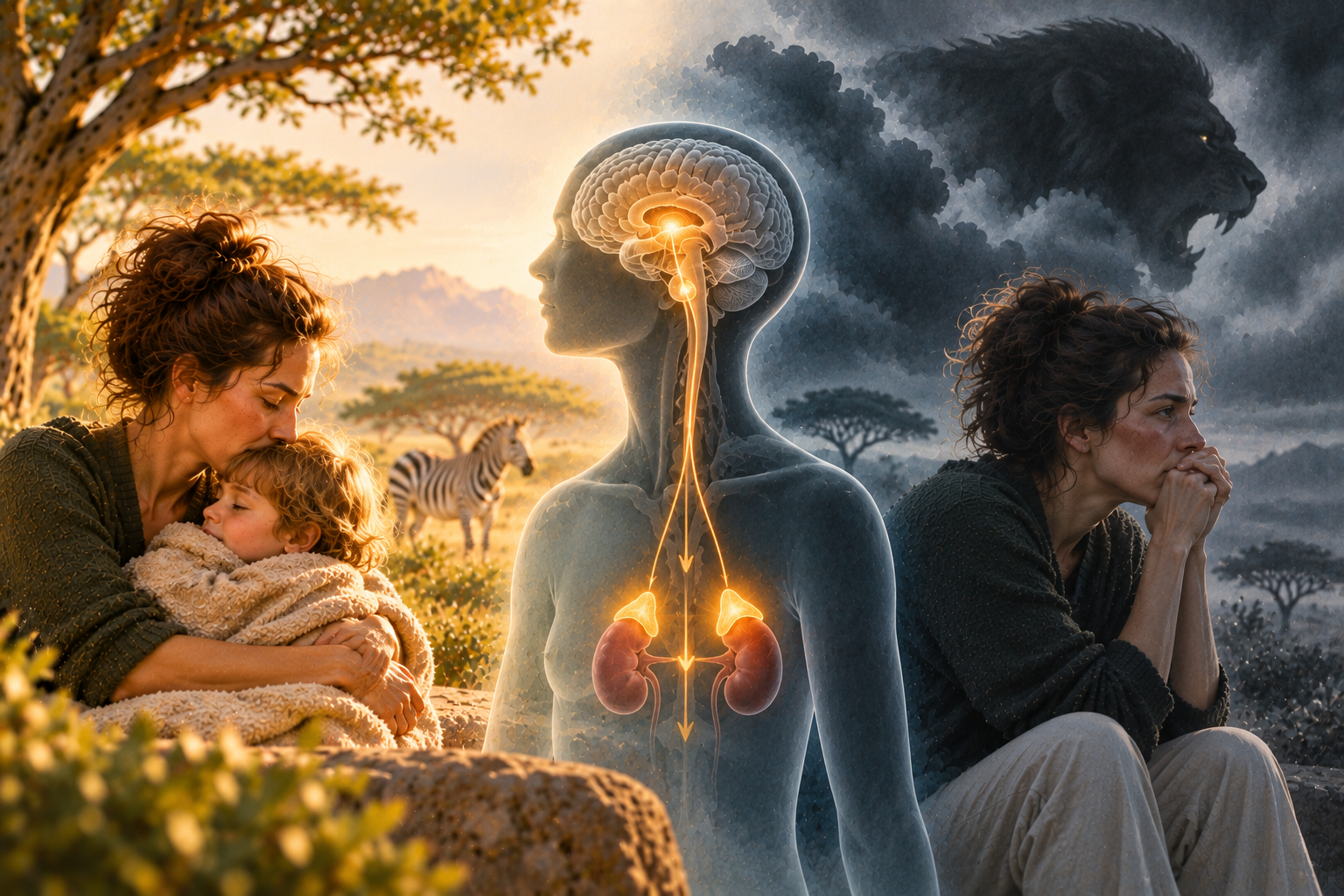
Appraisal, control and support change the physiological response to the same events.
Key ideas
- •Outlets for frustration support coping.
- •Predictability and control depend on context.
- •Social support changes the experience of stress.
Glossary
Question for reflection
What can I change: the situation, available support or my appraisal?
Full chapter summary
Source of the summary: Robert Sapolsky — Why Zebras Don’t Get Ulcers, chapter 13.
Chapter thirteen, “Why Is Psychological Stress Stressful?”, connects physiology with psychology. It explains why the same life event barely affects one person but contributes to ulcers or heart attacks in another.
Sapolsky opens with the debate between Hans Selye, the founder of stress research, and psychiatrist John Mason. Selye viewed the response as physiological, triggered by cold, hunger or injury. Mason showed that psychological variables can themselves trigger or modify it. Even a painful procedure produces fewer stress hormones in a child held by their mother.
Sapolsky identifies five building blocks of psychological stress that shape how strongly we react:
1. Outlets for frustration
Electric shocks can produce ulcers in a rat. But allowing it to gnaw wood, run in a wheel or attack another rat sharply reduces that risk. Human outlets include hobbies, exercise and, regrettably, displaced aggression against someone weaker. Exercise is especially effective because it uses the energy mobilised by the stress response.
2. Social support
Friends, a partner or membership of a close-knit group strongly reduce the stress response. Without social support, cardiovascular risk is several times higher and survival during illness is poorer.
3. Predictability
A warning tone a few seconds before an electric shock reduces a rat’s stress response. Predictability tells us both when something bad will happen and, more importantly, when we can relax because the remaining time is safe. This explains the relief when a dentist says, “Only two more times.”
4. Control
Feeling able to influence events is crucial. A lever that cancels an electric shock reduces stress in a rat. Remarkably, even a disconnected lever can help if the animal still believes it has control. Conversely, particularly harmful occupational stress arises when demands are high but autonomy is low, as on an assembly line or in some middle-management roles.
5. Appraisal: getting better or worse?
Stress depends on our assessment of whether life is improving or worsening, rather than objective conditions alone. Ten shocks per hour feel terrible after yesterday’s five, but like a celebration after yesterday’s twenty-five. Context and the direction of change matter.
Important qualifications
Sapolsky warns that these principles are not mechanical rules. There are exceptions:
- Stress can be pleasurable: Complete predictability and control are unbearably boring. We pay to lose them on roller coasters or during horror films. The difference is that this stress is moderate, brief and experienced in a safe, favourable context.
- The danger of illusory control: A sense of control helps with minor stressors. During catastrophes such as incurable illness or bereavement, believing we could have controlled everything can create destructive guilt: “I should have prevented it.”
- The executive-stress myth: A famous 1950s experiment suggesting that executives develop more ulcers because of responsibility was flawed. In animals and humans, dominant individuals with greater control and predictability often experience less stress than subordinates.
Chapter conclusion: Our vulnerability to stress-related illness depends on psychological filters. The same queue or parachute jump may cause panic and loss of control for one person, but offer reading time or exhilaration to another. These filters help determine who becomes ill and who copes.
14Stress and Depression
Stress and Depression
The chapter connects biological vulnerability, life experience and learned helplessness.

Key ideas
- •Depression differs from ordinary sadness.
- •Hormonal regulation is linked to mood.
- •Uncontrollable stress can foster helplessness.
Glossary
Question for reflection
How does supporting someone with depression differ from telling them to pull themselves together?
Full chapter summary
Source of the summary: Robert Sapolsky — Why Zebras Don’t Get Ulcers, chapter 14.
Chapter fourteen, “Stress and Depression”, explores the close connection between severe stress and clinical depression. Sapolsky describes depression as a genetic and neurochemical disorder triggered by environmental factors.
These are the key concepts:
1. Symptoms: more than sadness
Clinical depression is a serious, disabling illness, not a passing low mood. Its defining feature is anhedonia: inability to enjoy life, or “inability to admire sunsets”. Other symptoms include:
- Distorted perception and delusional ideas: Grief and guilt lead people to interpret facts negatively, convinced that circumstances are hopeless and will worsen.
- Vegetative symptoms: Unlike ordinary sadness, in which we may sleep and eat more, severe depression often includes early waking, appetite loss and excessively high glucocorticoids.
2. Neurochemistry and anatomy
Biologically, depression involves altered neurotransmission and brain regions:
- The big three: Disrupted serotonin, noradrenaline and dopamine signalling is implicated. Insufficient dopamine is linked to dysfunction in the brain’s pleasure system and anhedonia.
- Sapolsky also discusses substance P, involved in physical pain. Blocking it sometimes has antidepressant effects, illustrating depression as emotional pain.
- Depression involves increased activity in the anterior cingulate cortex, a region responsive to physical pain and negative emotions such as dread and rejection.
3. Glucocorticoids: how stress disrupts regulation
Stress acts as a trigger. Repeated or severe stress can impair feedback, leaving the brain unable to stop stress-hormone production promptly.
- Hormonal contribution: Excess glucocorticoids can themselves cause depressive symptoms, as seen in Cushing’s disease or with high doses of synthetic hormones.
- Brain changes: Prolonged excess stress hormones during depression contribute to reduced hippocampal and frontal-cortex volume and serious memory difficulties.
- Blocking glucocorticoid receptors may be a successful treatment approach for some patients.
4. Psychology and learned helplessness
Sapolsky connects biology with psychological explanations:
- In Freud’s psychoanalytic account, depression is aggression turned inward. This describes an intense internal conflict associated with psychomotor slowing and high stress hormones.
- Learned helplessness: Martin Seligman’s experiments showed that repeated uncontrollable, inescapable stressors can teach animals or people helplessness. Motivation is lost and actions seem pointless even after circumstances improve.
5. Why does not everyone develop depression?
Stress depletes neurotransmitter reserves, but normally the body restores them by synthesising noradrenaline and serotonin. Vulnerability differs with genetics and childhood experience. Severe early trauma can leave lifelong sensitivity. Certain genetic variants, such as those discussed in relation to the serotonin-regulating 5-HTT gene, may interfere with recovery after major stress.
Chapter conclusion: Depression arises at the intersection of biology and experience. Severe, uncontrollable stress in a biologically and genetically vulnerable person can overwhelm neurochemical recovery, producing learned helplessness and profound biochemical disruption.
15Personality, Temperament and Stress
Personality, Temperament and Stress
Perception and emotional response influence stress burden.
Key ideas
- •Distinguishing danger from neutral events matters.
- •Hostility and emotional suppression have physiological costs.
- •Social connections can buffer stress.
Glossary
Question for reflection
Which habitual interpretations increase my stress, and which help?
Full chapter summary
Source of the summary: Robert Sapolsky — Why Zebras Don’t Get Ulcers, chapter 15.
Chapter fifteen, “Personality, Temperament, and Their Stress-Related Consequences”, asks why some people become stressed and ill in circumstances where others stay well. Our affective style—personality and temperament—acts as a filter that can turn a neutral event into a threat or soften a real crisis.
These are the main concepts:
1. Gary and Kenneth: lessons from baboons
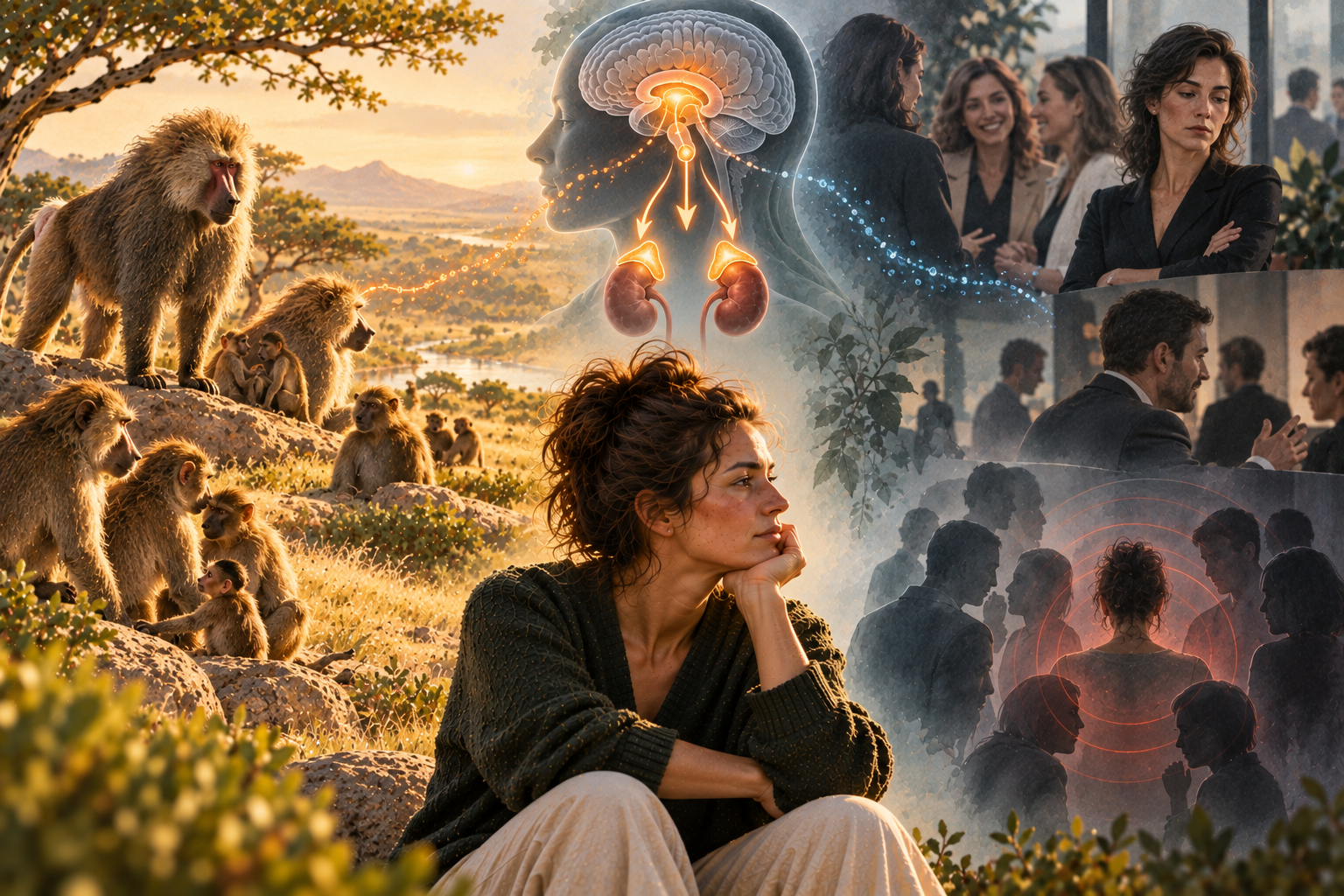
The chapter introduces two successful males in their prime. Gary is aggressive, distrustful and sees rivals everywhere; his blood pressure and glucocorticoids are high. Kenneth is a peacemaker and team player who gave up competition for top rank to spend time with his family; his physiology is excellent. The twist is that both are wild baboons. Sapolsky identified traits associated with the lowest stress:
- They distinguish real threats from neutral behaviour and do not worry when a rival simply lies down to sleep.
- Faced with a real threat, they take control and act first.
- They accurately assess whether they have won or lost.
- They maintain close social ties, grooming with females and playing with young without an immediate purpose.
By contrast, highly reactive individuals, including some macaques, see threats everywhere, panic at novelty and sustain harmful stress-hormone levels.
2. Anxiety: the biology of fear
Sapolsky distinguishes depression, where the organism gives up and glucocorticoids dominate, from anxiety, where it desperately tries to handle danger with adrenaline and noradrenaline.
- The amygdala: This fear-related brain region supports unconscious, implicit memory of threats.
- Unlike the hippocampus, which deteriorates under stress, the amygdala grows and becomes more excitable. Anxiety may then seem causeless because the brain raises an alarm without real danger.
3. Type A personality and worn-out chairs
Type A individuals are competitive, impatient, hurried and hostile, with high cardiovascular risk. Cardiologists Friedman and Rosenman reportedly recognised this pattern through an upholsterer: their waiting-room chairs wore differently because patients perched on the edge and impatiently clawed the armrests. Researchers later found that hostility and cynicism, rather than haste alone, were central to the risk, especially when anger was outwardly suppressed, producing sharp blood-pressure rises.
4. Repressive personality: the cost of a perfect facade
About 5% of people appear entirely happy, successful and calm, without depression or anxiety, yet show chronically high glucocorticoids and weaker immunity. These are repressive personalities. Their calm reflects intense internal effort rather than relaxation. The frontal cortex works hard to suppress impulsive emotions and maintain a rigid, surprise-free world. Health pays the price for the composed facade.
Chapter conclusion: How we perceive the world shapes physiology. Hostility, constant threat anticipation or strenuous emotional suppression can activate stress without an external danger. Distinguishing genuine from imagined threats and maintaining social ties, as Kenneth does, offer protection.
16Dependence, Sensation Seeking and Pleasure
Dependence, Sensation Seeking and Pleasure
Brief stress can be enjoyable, while chronic stress can disrupt reward systems.
Key ideas
- •Anticipation involves dopamine.
- •Tolerance changes responses to reward.
- •Stress can make overcoming dependence harder.
Glossary
Question for reflection
How can I distinguish enjoyable stimulation from constantly trying to numb discomfort?
Full chapter summary
Source of the summary: Robert Sapolsky — Why Zebras Don’t Get Ulcers, chapter 16.
Chapter sixteen, “Junkies, Adrenaline Junkies, and Pleasure”, explores why we sometimes pay to experience stress, how pleasure works biologically, and why psychological stress is closely connected with substance dependence.
These are the main concepts:
1. Tickling and the stress paradox
Why can we not tickle ourselves? Tickling requires surprise, unpredictability and loss of control—the foundations of psychological stress. Context is the key. Brief loss of control in a safe, friendly setting can be enjoyable, as on roller coasters, in horror films or during bungee jumping. We call moderate stress in these circumstances stimulation, and it brings pleasure.
2. Dopamine and anticipation
Dopamine regulates pleasure, but Sapolsky challenges the idea that it simply appears in response to a reward. Its strongest surge occurs during anticipation, providing fuel for the work needed to obtain the reward.
- Probabilistic reinforcement: An uncertain reward can produce an even stronger surge—perhaps I will get it, perhaps not. Uncertainty and hope make anticipation compelling.
- An interesting example: Dopamine supports the intense passion of early romantic love. In long, calm relationships, the anterior cingulate cortex becomes more prominent, contributing warmth and comfort.
3. Good stress and sensation seekers
Brief, moderate glucocorticoid exposure stimulates dopamine release in pleasure circuits. We feel alert, focused, alive and motivated. Sensation seekers may naturally have lower dopamine or less sensitive receptors, needing extreme risks for a powerful hormonal surge. Over time, greater stimulation is needed for the same high.
4. The mechanics of dependence
Drugs artificially flood synapses with dopamine. To protect itself from excessive stimulation, the brain reduces sensitivity by reducing receptor numbers: an opponent process.
- Tolerance develops, requiring progressively larger doses for the same effect.
- When the drug wears off, the system falls below baseline rather than merely returning to normal. The drug changes from a pleasure source into a generator of anxiety, driving another dose simply to escape distress.
5. Why stress encourages dependence
Stress increases dependence risk, makes quitting harder and promotes relapse. Several biological mechanisms contribute:
- Chronic stress depletes dopamine and produces dysphoria, an inability to feel joy, creating a craving for the rapid surge promised by a drug.
- Stress disrupts the frontal cortex, which normally regulates impulses, rational thinking and delayed gratification. It becomes less able to resist an impulsive urge to take a drug.
- Individual vulnerability: People and animals genetically more reactive, releasing more glucocorticoids to novelty or stress, are more likely to develop dependence.
Chapter conclusion: Dependence can serve two different purposes: seeking positive emotions through dopamine, or suppressing pain, depression, anxiety and chronic stress. Brief, moderate stress adds vitality and motivation, whereas chronic stress disrupts reward systems and increases vulnerability to destructive dependence.
17The View from the Bottom
The View from the Bottom
Hierarchy, poverty and inequality shape opportunities to cope with stress.

Key ideas
- •Health has a social context.
- •Low control adds to the burden.
- •Trust and public resources matter for health.
Glossary
Question for reflection
Which stressors require social change as well as individual effort?
Full chapter summary
Source of the summary: Robert Sapolsky — Why Zebras Don’t Get Ulcers, chapter 17.
Chapter seventeen, “The View from the Bottom”, moves from individual biology and psychology to society. It explains how social rank and the kind of society we inhabit shape illness and allostatic load.
These are the main concepts and mechanisms:
1. The third leg of the stool: illness in context
Reductionist medicine focuses on biological causes such as viruses, bacteria and genes; psychosomatic medicine adds personal appraisal and lack of control. A third leg is socioeconomic context. Health depends on the society we live in and our position within it.
Sapolsky cites nineteenth-century German pathologist Rudolf Virchow, who helped establish social medicine alongside his microscopic discoveries. He argued that poverty, overcrowding and lack of rights harm the body as biological pathogens do.
2. Animal lessons: rank and stress
In many social animals, from primates and rodents to predators and fish, subordination is closely connected with chronic stress.
- Subordinates show inefficient hormonal profiles: high resting glucocorticoids, raised blood pressure, low HDL cholesterol, slower responses to genuine threats and reduced growth-factor release for healing.
- Rank causes physiological changes rather than merely resulting from them, as experiments with artificially formed groups demonstrated.
- Subordinates do not always experience chronic stress; social organisation matters. Stress is greatest where dominant animals repeatedly attack them and social support, such as grooming, is unavailable.
3. The human equivalent: poverty’s cost
The human counterpart of a low-ranking animal is a person living in poverty.
- Poverty involves physical stressors—hard work, sleep loss and discomfort—and psychological ones: lack of control, unpredictability, fear of dismissal and insufficient money until payday.
- Without resources in reserve, people cannot plan ahead and must react to immediate crises, making later decisions more costly. Unsafe neighbourhoods limit even walks as an outlet, while loved ones working several jobs have little capacity to provide support.
- Low socioeconomic status (SES) consequently predicts higher mortality and many illnesses, from cardiovascular and respiratory disease to ulcers and depression.
4. Why equal medical access is not enough
Fair distribution and equal healthcare access seem like the solution. Yet Sapolsky notes that the SES health gradient persists in countries with publicly funded healthcare, including Britain and Sweden.
- Michael Marmot’s Whitehall studies found four times greater heart-disease mortality among lower-ranking British civil servants than senior staff, despite stable employment and equal healthcare access.
- Conventional risks, such as smoking, cholesterol and excess weight, explain only a third of this gradient. Psychological factors, especially stress, account for another third.
5. Being poor and feeling poor: status and inequality
A key epidemiological finding is that, once basic food and housing needs are met, health depends not simply on poverty but on feeling poorer than others.
- Subjective SES: Nancy Adler’s research found that perceived position on the social ladder predicts glucocorticoids, metabolism and cardiovascular health even better than actual income.
- Income inequality: Richard Wilkinson’s work argues that the gap between rich and poor matters more than absolute income. Greater inequality accompanies poorer population health, affecting both rich and poor.
6. How does inequality become illness?
Sapolsky identifies two pathways through which economic separation damages health via stress:
1. Erosion of social capital: Social capital is trust, mutual assistance and cohesion—neighbours trusting one another, leaving doors unlocked and participating in community life. High inequality erodes it, creating hostility, isolation and crime, including displaced aggression among disadvantaged people.
2. Wealth separates from public needs: When the gap is enormous, wealthy people lose interest in funding good public schools, hospitals, parks and clean transport. They favour private security, doctors and schools. Public deprivation then increases everyday stress and allostatic load for everyone else.
Chapter conclusion: Reducing stress-related illness across a population requires more than distributing medical insurance. Chronic stress and poverty-related disease are rooted in social fragmentation, inequality and the lack of support, trust and attention experienced by many members of society.
18Managing Stress
Managing Stress
The closing chapter explores flexible ways to handle difficulties.
Key ideas
- •Practice must fit the person and circumstances.
- •Movement and meditation can support recovery.
- •Distinguish what can change from what cannot.
Glossary
Question for reflection
Where do I need to act, and where should I accept limits and seek support?
Full chapter summary
Source of the summary: Robert Sapolsky — Why Zebras Don’t Get Ulcers, chapter 18.
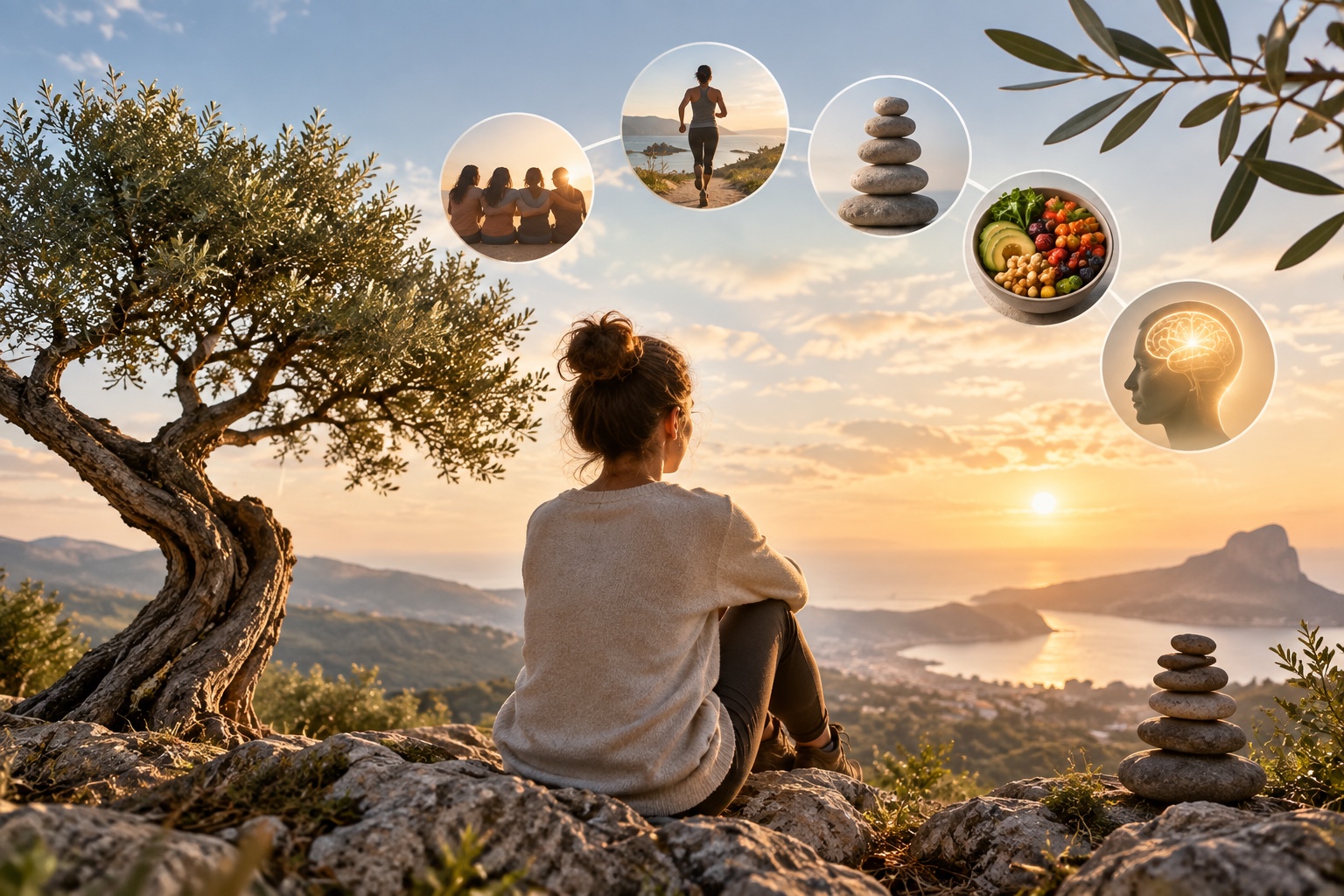
The final chapter, eighteen, “Managing Stress”, brings the book together with a hopeful message. Although chronic stress can harm the body in many ways, not everyone becomes ill. We can change biologically and psychologically, adapt and protect ourselves from everyday worries.
These are the chapter’s key concepts, practical methods and principles:
1. The 80/20 rule of stress management
Sapolsky offers a practical rule of thumb: the first 20% of effort achieves 80% of stress reduction.
- The key is deciding to begin: Advice from doctors or loved ones cannot change behaviour, including hostile Type A patterns, until the person genuinely wants to change.
- The first action matters: Making a decision and taking a real step, such as booking an initial psychotherapy appointment, can already bring considerable relief. Regaining control and moving out of a dead end starts recovery. Simple, regular practice matters more than an ideal method endlessly postponed.
2. Read the label: an individual approach
There is no universal mantra of more control, predictability and social support. What helps one person may harm another:
- It is inappropriate to mechanically advise a single mother working several jobs to find a relaxing hobby, or war refugees to monitor cholesterol.
- Stress management must fit the individual and their particular problems.
3. The biology of exercise
Physical activity is among the most effective, scientifically supported outlets:
- Evolutionary purpose: The stress response prepares muscles for explosive energy use, to flee or fight. Exercise uses that mobilised energy for its intended purpose instead of leaving it to damage blood vessels during a dull meeting.
- Voluntary participation matters: Exercise reduces stress when chosen freely. Rats voluntarily running in wheels became healthier, whereas forced running markedly worsened their health.
- Limits: Improved mood and reduced stress reactivity last only a few hours after exercise, and excessive training can itself be a biological stressor.
4. Meditation
Regular meditation, described as 15–30 minutes daily, benefits health by reducing glucocorticoids and sympathetic tone. As with exercise, physiological benefits such as lower blood pressure are strongest during the activity itself; maintaining them requires consistent practice.
5. The two sides of control and predictability
Control and predictability are powerful but double-edged. Trying to control everything can be harmful:
- Limits of control: Perceived control helps with mild daily stressors. Faced with unavoidable catastrophes such as incurable illness, believing everything is controllable can produce destructive guilt: “It is my fault; I should have prevented it.”
- False hope: Telling people they can defeat cancer through willpower or the right attitude is dangerous and unethical, encouraging them to blame themselves for illness.
- Limits of predictability: Accurate forecasts offer little benefit for routine events or extremely rare threats, when information comes too late, or when it is overwhelmingly negative.
6. Cognitive flexibility: a blade of grass and a hurricane
Effective coping requires cognitive flexibility: assessing circumstances and changing strategies when needed.
- If a problem can be solved, use active, problem-focused coping, such as studying for a difficult exam. If it cannot be changed, shift towards emotions, acceptance and social support, as in bereavement.
- When a strategy fails, people often repeat it with twice the effort. Flexibility instead means finding the strength to try something different.
Sapolsky illustrates this flexibility with words from a Quaker meeting:
“When strong winds blow, let me be a blade of grass. When I face a wall, let me be a hurricane.”
Sometimes coping means knocking down a wall. At other times, protecting physical and mental health means bending temporarily like grass, then straightening when the storm passes.
The book’s main message: In our privileged modern lives, we are clever enough to create psychological stressors in our heads and foolish enough to let them damage our bodies. But we also possess the wisdom to reduce their destructive influence on our physiology.
Original Sensus Vitae study notes. This summary is not a substitute for the book or for medical advice.